 |
|||||||
Saturday, October 4, 2025 |
|||||||
| |||||||



RULE OF THE BRITISH GOVERNORS AND GOVERNOR GENERALS
Robert Clive
After the victory of the English in
Buxar Clive
was appointed the governor and commander in chief of the English possessions in  Bengal. Clive took up the task of stabilizing the political status of the territory
under him. He settled relations with Oudh by the Treaty of Allahabad in 1765. In
his move to settle the problem of administrating Bengal he introduced the Dual
system. According to this system the real power of jurisdiction lay with the company
while the responsibility of administration was of the Nawab of Bengal. This
system proved a failure. It led to breakdown of the administrative machinery.
Law and order broke down. There was economic disorder with the
collection of revenue adding to the misery of the people. Agricultural
depression affected trade and commerce with the company servants monopolizing
the internal trade of Bengal thus adding to their personal wealth
other than contributing to the company finances. The cottage industries of
Bengal suffered as it was discouraged . The company servants increased the price
of raw materials. The artisans who now found their occupation unprofitable left
it.
Bengal. Clive took up the task of stabilizing the political status of the territory
under him. He settled relations with Oudh by the Treaty of Allahabad in 1765. In
his move to settle the problem of administrating Bengal he introduced the Dual
system. According to this system the real power of jurisdiction lay with the company
while the responsibility of administration was of the Nawab of Bengal. This
system proved a failure. It led to breakdown of the administrative machinery.
Law and order broke down. There was economic disorder with the
collection of revenue adding to the misery of the people. Agricultural
depression affected trade and commerce with the company servants monopolizing
the internal trade of Bengal thus adding to their personal wealth
other than contributing to the company finances. The cottage industries of
Bengal suffered as it was discouraged . The company servants increased the price
of raw materials. The artisans who now found their occupation unprofitable left
it.
Robert Clive also brought reforms in the administration of the company and the organisation of the military. He is claimed as the founder of the British political dominion in India and is said to have laid the foundation of all future progresses of the British in India.
Warren Hastings
Warren Hastings was appointed the Governor of Bengal
in 1772. Bengal was now a state of disor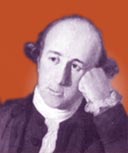 der. Warren Hastings took over the task
of reforming the administration of Bengal. A Board of revenue comprising of the
Governor and a council was to manage the revenue. The entire responsibility of
internal administration was taken over by the company servants. To bring forth a
reform in the affairs of revenue Warren Hastings introduced a five year
settlement of land revenue in 1772. But owing to several defects this system
was scrapped in 1776. Cornwallis resorted to annual settlement under the
supervision by a
committee of Revenue. He was thus unsuccessful in his attempt to reform
the
revenue system in Bengal.
der. Warren Hastings took over the task
of reforming the administration of Bengal. A Board of revenue comprising of the
Governor and a council was to manage the revenue. The entire responsibility of
internal administration was taken over by the company servants. To bring forth a
reform in the affairs of revenue Warren Hastings introduced a five year
settlement of land revenue in 1772. But owing to several defects this system
was scrapped in 1776. Cornwallis resorted to annual settlement under the
supervision by a
committee of Revenue. He was thus unsuccessful in his attempt to reform
the
revenue system in Bengal.
Warren Hastings built a system of justice in 1772 at the district level by setting up a Diwani Adalat and a Faujdari Adalat. This was based on the Mughal model. In 1773 the Regulating Act was passed which provided for the setting up of a supreme court to try all British subjects. He attempted to codify the Muslim and Hindu laws .It was titled 'Code of Gentoo Laws'. In the field of commerce five custom houses were set up. He brought regulations to prevent misuse of dastaks, check the exploitation of weavers by company agents and developed trade relations with Bhutan and Tibet.
Warren Hasting faced an uphill task in dealing with the Indian rulers. He faced stiff resistance from the Marathas in the north and Hyder Ali in the south. In 1773 he concluded the treaty of Banaras with the Nawab of Oudh appeasing the emperor and getting financial gains thus blocking alliances between the Marathas and the Nawab of Oudh. Warren Hastings's diplomacy in participating the Rohilla War 1774 was a strategy of his to include Rohilkhand in the company's jurisdiction.
During the period 1772-1785 the territory of the East India company included Bengal. Bihar Orissa, Banaras and Ghazipur. It also included the Northern Sarkars, port of Salsette and the harbours of Madras, Bombay and other minor ports. The Mughal territory included Delhi and other adjoining areas. The territory of Oudh which was autonomous were bound in an offensive-defensive alliance with the East India Company since 1765. The north western part of India was under the Sikh Misls, who controlled region around the Sultej. The Muslim chiefs ruled in North western Punjab, Multan, Sindh and Kashmir. The Marathas dominated over western India, parts of Central India from Delhi to Hyderabad and Gujarat to Cuttak. The Deccan which consisted of Hyderabad was ruled by the Nizam. Hyder Ali was ruling over Mysore. Tanjore and Travancore were under the Hindu rulers.
| |||||||||||||
|
| |||||||||||||
| Updated on 03/08/2015 |


