 |
|||||||
Saturday, April 20, 2024 |
|||||||
| |||||||



HARSHAVARDHANA
The rule of Harshavardhana from (606-647AD) being the only consolidated rule after the Guptas is described in details through various sources like.
-
The accounts of pilgrims
-
Official Chinese documents
-
Coins and inscriptions
-
Writings by well known personalities of that period
The predecessors of Harshavardhana was from Thaneshwar. Harshavardhana was the younger son of Prabhakara Vardhana, Raja of Thaneshwar. Prabhakaravardhana died in 605 AD. Prabhakaravardhana's daughter Rajyasri was married to the king Maukhari King Grahavarman. Sasanka the king of Gauda, with the help of the king of Malwa defeated and killed Grahavarman of Kannauj and imprisoned Rajyasri. Rajyavardhan who then ruled Kannauj advanced against Sasanka to avenge his sisters fate. But he was killed by Sasanka. Thus the throne of Kannauj became vacant and Harshavardhana had to ascend the throne. Harshavardhana pursued a policy of conquest to consolidate his authority over north India. Punjab, Kannauj, parts of Bihar and Bengal formed a part of his kingdom as a result of his conquests. By 612 Harshavardhana consolidated his kingdom in northern India. The problems caused by the small independent kingdoms who were engaged in conflicts among themselves was overcome after the subjection of these petty states extending from the east to west. In 620AD Harshavardhana invaded the Chalukya kingdom in the Deccan which was then ruled by Pulakesin II. But the Chalukya resistance proved tough for Harshavardhana and he was defeated. Thus his kingdom in the south was upto the limit of the Narmada. His alliance with king Bhaskaravarman the ruler of Kamrupa (Assam) also prove advantageous in establishing a strong rule.
Harshavardhana is well known for his religious toleration, able administration and diplomatic relations. This gives him a position among the other monarchs of the later period whose role in the construction of the Indian history is significant .
Harshavardhana maintained diplomatic relations with China and sent envoys who exchanged ideas of the Chinese rulers and developed their knowledge about each other.
Harshavardhanan was a Hindu, but he maintained and impartial toleration towards the other religions, especially Buddhism which at that time was the religion of the common masses. Following the path set by Ashoka he bestowed and supported kindness towards animals along with honouring the Hindu gods, and showed respect to the Brahmanas. Inter religious assemblies organised at Kannauj and Prayag portrays the religious attitude of Harshavardhana. Besides favouring religious sentiments he also had a strong perception towards learning.
To honour Huien Tsang, the Chinese pilgrim who
was extraordinary with his ideas about Buddhist teaching and his romance
of adventure to the holy land of Buddha, Harshavardhana organised the Kannauj
Assembly in 643 AD. this was a grand assembly of many rajas including King
Bhaskaravarman of Kamrupa (Assam) and the Vallabhi king Dhuvabhatti. The
Assembly at Kannauj included a large congregation of Brahmans, Buddhist
monks and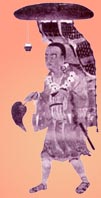 s Jains, who were involved in religious discourses. The image of Buddha
was installed and royal treasures were distributed. From Kannauj, Hieun Tsang
the royal the royal guest was carried to Prayaga (Allahabad) on the banks of the
Ganga, Yamuna and Saraswati. The ceremonies lasted for about two months during
which tributes were offered to the Buddha. This assembly was the sixth held at
Allahabad, others regularly performed by Harshavardhana though through the
simple distribution of alms to the poor. Harshavardhana developed a strong
favour towards Mahayana Buddhism after his relation with Hiuem Tsang. During the
rule of Harsha, Kannauj flourished immensely outdoing the grandeurs of
Patilaputra, situated on the Ganges. This
ancient town was transformed into a well fortified city with well planned
buildings beautiful gardens and tanks. Numerous
Buddhist monasteries and Brahmanical temples were erected. The inhabitants of
the city were wealthy and lead a standard style of life.
s Jains, who were involved in religious discourses. The image of Buddha
was installed and royal treasures were distributed. From Kannauj, Hieun Tsang
the royal the royal guest was carried to Prayaga (Allahabad) on the banks of the
Ganga, Yamuna and Saraswati. The ceremonies lasted for about two months during
which tributes were offered to the Buddha. This assembly was the sixth held at
Allahabad, others regularly performed by Harshavardhana though through the
simple distribution of alms to the poor. Harshavardhana developed a strong
favour towards Mahayana Buddhism after his relation with Hiuem Tsang. During the
rule of Harsha, Kannauj flourished immensely outdoing the grandeurs of
Patilaputra, situated on the Ganges. This
ancient town was transformed into a well fortified city with well planned
buildings beautiful gardens and tanks. Numerous
Buddhist monasteries and Brahmanical temples were erected. The inhabitants of
the city were wealthy and lead a standard style of life.
Harshavardhana's efficient administration was owing to his personal supervision of his extensive empire. Regular inspections through an organised civil service and a council of ministers. Penal code was severe with punishments extending to mutations and banishments. Land revenue was fixed at one sixth of the production from the land. Many of the provinces were governed by Rajas.
Harshavardhana's character can be said to be a fusion of the attributes of Samudragupta, in his military conquests and Ashoka in his religious toleration and statesmanship. He was also a scholar and a poet. He was also the last Hindu emperor of Northern India. Harshavardhana died in about 647 AD. After his death there was disorder in Northern India. During the period from the death of Harshavardhana to the conquest of the Muslims Indian history circles around numerous kingdoms in the north and south. The territories of Harsha was parceled among various rulers.
Narasinghavarman, the Pallava King of Kanchi, became the sovereign power in the peninsula. King Bhaskravarman of Assam annexed the territories formerly under Harshavardhana.
| |||||||||||||
|
| |||||||||||||
| Updated on 03/08/2015 |


