 |
|||||||
Tuesday, November 18, 2025 |
|||||||
| |||||||



PERIOD UNDER THE ARYANS
| Life in the Aryan society | Later Aryan (Vedic Period) | Literature In Vedic Period |
Origin of the Aryans
Opinions
 differ regarding the original home of the Aryans. The most accepted
view is that the region between Poland to the Central Asia might have been of
the Aryans. They were said to be semi- nomadic people, who started moving from
their original home towards the west, south and east. The branch which went to
Europe were the ancestors of the Greeks, Romans, Celts and Teutons.
Another branch went to Anatolia. The
differ regarding the original home of the Aryans. The most accepted
view is that the region between Poland to the Central Asia might have been of
the Aryans. They were said to be semi- nomadic people, who started moving from
their original home towards the west, south and east. The branch which went to
Europe were the ancestors of the Greeks, Romans, Celts and Teutons.
Another branch went to Anatolia. The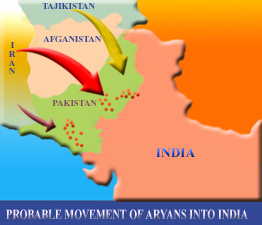 great empire of the Hitties evolved from
the mixture of these immigrants with the original people. The branch which
remained were the ancestors of the Slavonic people. The group which moved south
came to conflict with the west Asian civilization. In course of their journey
towards the east or south a group of Aryans had settled in Iran. They
crossed the Hindukush and entered India through Afghanistan and captured
the greater part of the northern India. They came to be known as Indo-Aryans to
distinguish them from the others who spoke a language different from those who
settled in western Asia and Europe.
great empire of the Hitties evolved from
the mixture of these immigrants with the original people. The branch which
remained were the ancestors of the Slavonic people. The group which moved south
came to conflict with the west Asian civilization. In course of their journey
towards the east or south a group of Aryans had settled in Iran. They
crossed the Hindukush and entered India through Afghanistan and captured
the greater part of the northern India. They came to be known as Indo-Aryans to
distinguish them from the others who spoke a language different from those who
settled in western Asia and Europe.
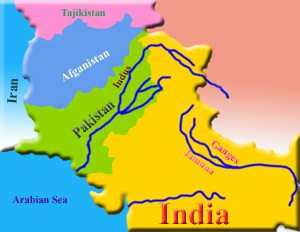
The Indo-Aryans entered Punjab and the other north-western part of India. They moved towards south-east and eastwards into the Ganga Valley. The Aryans were pastoral Nomads. They settled in villages. The region which the Aryans occupied was known as Sapta Sindhu. Moving further eastwards they settled along the Ganga and Jamuna. In due course of time the whole of northern India were under the Aryans and it was called Aryavarta or the land of the Aryans. The period of Aryan settlement was between 2500 and 1500BC. The early Aryans were divided into many tribes. A few among them are Anus, Druhyus, Yadus, Turvasas and Purus. They settled on either side of the river Saraswati. They were involved in fighting among themselves. Besides these tribal warfare the Aryans were engaged in struggles with the dark skinned people or Dasyus. The Dasyus were the Dravidians who occupied the regions of the Indus valley civilization. The superiority of the Aryans resulted in the Dravidian submission and retirement to the south.
Political Organization
Family served a s the basis of the both social and political organization.
Families together formed the grama. Villages together formed is and they turn
formed the janas. The community was patriarchical and each tribe was under the
chief whose position was hereditary. The rastra was ruled by the king
which was normally hereditary. The king led the tribe in battle, and protected
the people. The Purohita was one of the important signatory. He was the
sole associate of the king his friend, philosopher and guide. The Senani
the leader of the army, and Gramani the head of the village. The main
duty of the king was the protection of his subjects, property, defence and
maintenance of peace. The king was not an autocrat he was controlled by two
popular assemblies Sabha and Samiti. These assemblies brought forth the
people's view on various issues. The Sabhas also discharged legal duties
like providing justice. Individual ownership of property was
recognized. The land was a property owned by the family. The property passed on
in a hereditary manner from father to
son.
s the basis of the both social and political organization.
Families together formed the grama. Villages together formed is and they turn
formed the janas. The community was patriarchical and each tribe was under the
chief whose position was hereditary. The rastra was ruled by the king
which was normally hereditary. The king led the tribe in battle, and protected
the people. The Purohita was one of the important signatory. He was the
sole associate of the king his friend, philosopher and guide. The Senani
the leader of the army, and Gramani the head of the village. The main
duty of the king was the protection of his subjects, property, defence and
maintenance of peace. The king was not an autocrat he was controlled by two
popular assemblies Sabha and Samiti. These assemblies brought forth the
people's view on various issues. The Sabhas also discharged legal duties
like providing justice. Individual ownership of property was
recognized. The land was a property owned by the family. The property passed on
in a hereditary manner from father to
son.
Economic Condition
The Aryans who were semi-nomadic people also domesticated animals which helped them in the activities of agriculture and other pastoral and hunting acts. Agriculture consisted the major share of their economy. Canals to provide irrigation was a significant feature of this occupation. Coins were unknown and trade was through the Barter system. Craft was not a popular profession. The lack of good roads might have hampered trade, but river navigation was existing. Specialization in areas such as carpentry, smithy, weaving, pottery, etc had been taking place.


