 |
|||||||
Thursday, November 6, 2025 |
|||||||
| |||||||



LIFE IN THE ARYAN SOCIETY
| Aryans | Later Aryan (Vedic Period) | Literature In Vedic Period |
Family being the basis of the Aryan social life
needed to be a healthy bond. Monogamy was the usu al
rule but polygamy was also practiced. Women played an important role in the
family. They also excelled in education. Apata Visvara and Ghosa were a few
who even composed mantras. Both vegetarian and non-vegetarian food were common.
Wheat and barley was the common food grains. Drinks included the Soma and Sura
which were intoxicating and was drunk during festivals.
al
rule but polygamy was also practiced. Women played an important role in the
family. They also excelled in education. Apata Visvara and Ghosa were a few
who even composed mantras. Both vegetarian and non-vegetarian food were common.
Wheat and barley was the common food grains. Drinks included the Soma and Sura
which were intoxicating and was drunk during festivals.
The dress consisted of two or three garments- an under garment, garment and a cloak. These were made of wool or skin and colored yellow and red. Gold ornaments such as necklaces, earrings, anklets, and bracelets were common and was worn by both men and women. Women enjoyed equal status and received education with the men. They also freely participated in public life.
Religion
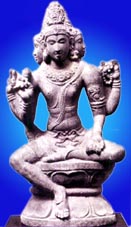 The
Aryans worshipped many gods and goddess. Most of the objects they worshipped
were the personification of the forces of nature. The religious beliefs of the
Aryans and its essential elements were contained in the Rig Veda. It was
based on the beliefs that
The
Aryans worshipped many gods and goddess. Most of the objects they worshipped
were the personification of the forces of nature. The religious beliefs of the
Aryans and its essential elements were contained in the Rig Veda. It was
based on the beliefs that
-
The numerous gods and goddess were personifications of whatever that was noble splendid and striking in nature .
-
The common people sought refugee under these powers who did good answer as evil. To get the good offerings as food and drinks has to be made.
-
Fire was the means of messengers who carried the offerings to the gods . This was done amidst the chanting of hymns of praise .
There were numerous deities, classified under terrestrial, atmospheric, and celestial group. Agni, Indra and varuna were the chief deities. They also included Agni, vayu, surya, prithivi,etc. Gods and goddess were worshipped with simple ceremonials known as Yajna or sacrifices.
Extent of Aryans in India
The Aryans were said to have been spread into four divisions of the country as portrayed by Manu
-
Brahmavarta
-
Braharishi Desha
-
Madhya Desha
-
Aryavarta
(a) The Brahmavarta or the land of Gods was the region lying between the rivers Saraswati and Drishadwati It also included parts of Kurukshetra as mentioned in the Mahabharatha.
(b) The Braharishi Desha or the country of the holy sages. Comprised the territories of the Kurus, Matsya, Panchalas and Swsenas. Today they are known as Thaneshwar, Eastern Rajputana, the Doab and Mathura district.
(c) The Madhya Desa or the middle country occupied the region lying between the Himalayas and Vindhyas.
(d) The Aryavarta occupied the region between the Himalayas and the Vindhyas from the east to west.
Though a physical terrain segregated North and South India and resulted in the development of a Dravidian culture, yet the Aryans influenced the religious thoughts of the Dravidians
| Previous |


