You are in : GARDENING » FLOWERING PLANTS » Oleander
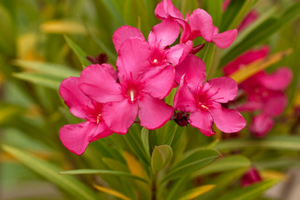
Oleander (Nerium Oleander)
| Scientific Name : Nerium Oleander |
| Family : Apocynaceae |
| Colour : Red, White, Pink, Light Yellow |
| Common names : Oleander, Kaner |
| Flowering Period : April-September |
| |
Oleander is a large fast growing
evergreen shrub, native to Asia and the Mediterranean region. This plant with glossy,
4 to 10 inch
long narrow dark green leaves and funnel-shaped flower clusters, single or
double can reach 3 to 20 feet tall. There are different varieties with varying
heights and flowers in some varieties are delightfully fragrant. This dense
plant which flowers abcan be used as borders, hedges, backgrounds and tall screens.
Dwarf varieties are suitable for container gardens.
Propagation and Care
Note : All parts of this plant are poisonous if ingested. Plant saps can cause allergic skin reactions in some people so always use gloves while tending them. Smoke from burning plant material can also be quite toxic.
|
Oleander is an easy growing plant in most conditions, especially in dry warm climates. It grows well in average, medium wet soils in full sun to part shade. The shrub can be trained or pruned to a single or multi stemmed tree.
Propagation is through vegetative cuttings. This species commonly produces many side shoots which can be replanted in their own pots in a standard mix of
well drained sand and peat. In the ground, the plant can be spaced 5-9feet apart depending on its variety. When in growth water often and allow plants to remain moist. When not actively growing, water plants sparingly and allow to dry out between watering. Yellowing of new leaves indicates over watering. Fertilize regularly during the growing period.
Prune the tips of young plants to help stimulate the production of new branches and prune grown plants to control size and shape. Promptly deadhead spent blooms to prevent formation of non-ornamental seed pods. No serious insect or disease problems. Aphids, mites, bacterial gall and scale may be a problem. Black deformed flowers, splitting branches etc are the symptoms. Infected parts of plant must be cut away and disinfected with a solution of equal mix of bleach and water. Remove and destroy any leaves damaged by leaf spot. Caterpillars may chew on the foliage.
Oleanders have a tendency to become leggy and should be pruned as needed to maintain a nice shape. By removing suckers at the base of the plant, and leaving just a few stems, oleander can be formed into very attractive small trees.
Questions of
Questions & Answers |
|
| 1. |
Posted on :
21.2.2010 By : Arun Sharma , Jaipur
|
View Answer (0)
|
Post Answer
|
|
| |
My 5 year old oleander is showing leaf wilting.
All new growth has wilted along with the flower buds. The branches appear to have "wrinkled skin". However new growth can be seen at the bottom of the plant.What is wrong with it? can it be saved? |
|
|
|
|
| 2. |
Posted on :
7.11.2009 By : jan davidson , Tunbridge Wells
|
View Answer (0)
|
Post Answer
|
|
| |
how do I overwinter a healthy oleanda growing in a pot? |
|
|
|
|
| 3. |
Posted on :
18.10.2009 By : angelica perez , fullerton, usa
|
View Answer (0)
|
Post Answer
|
|
| |
I found a little white larva worm burrowed into the branches of my oleander shrub, causing the leaves and branches to die, what is it and what can I do? |
|
|
|
|
| » more... |