|
|

Friday, April 19, 2024
|
|


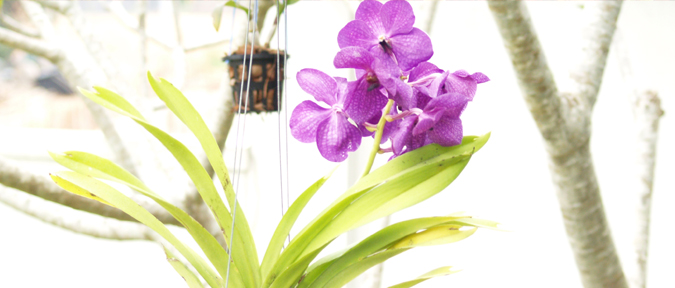
Orchids, one of the most fascinating, beautiful and peculiar variety among the flowering plants, have always been considered difficult to grow. But given the right climatic and cultural conditions, they can thrive anywhere and will flower regularly.
These plants belongs to the Orchidacae family, with all the difference in size, shape, colour, scent or lack of it. They are the most rapidly changing group of plants on earth with over 880 genera and 28,000 species.
Once the cultural needs of these fascinating plants are understood, growing orchids is relatively simple. It becomes a deeply satisfying and therapeutic activity. If given the right climatic and cultural conditions, they can thrive anywhere and will flower regularly. Some species of orchids may flower two or three times a year and some flower annually.
Orchids are divided into two basic growth types, namely monopodial and sympodial. Monopodial orchids have a central stem which grows continuously from the tip. They have no pseudobulbs, but produce new growth from the crown of the plant. Flowers are produced from the stem between the leaves, usually alternately from side to side. Sympodial orchids possess a rhizome which sends out a shoot. This develops into a stem and leaves and eventually produces flowers. In time, from the base of this growth, a new shoot develops and so on in a continuous cycle. The buds are often, though not always, protected by a sheath.
According to their different growth habits, orchids are generally divided into three main categories namely epiphytes, lithophytes and terrestrials. Epiphytes are suited for home culture and are grown perched high in the trees clinging to branches or in the trunk apex of the tree. They derive their nutrients from the air, rain, and any decaying vegetation which the roots can contact. They have specialised aerial roots which have a white spongy layer of cells called velamen. This protects the inner root tissues and absorbs water. These roots will also often dangle free in the atmosphere. Lithophytes can be seen covering the bases and forks of trees or filling crevices in rocks. They can absorb a maximum supply of nutrients from decaying mosses, humus and washed down soil. Terrestrials are soil loving plants growing in the ground, having a symbiotic relation with a special fungus. This fungus invades the cells of the root's outer layer, providing the plants with the nutrients and is essential for the seed germination of most orchids. It is the lack of this fungus that prevents many terrestrial orchids from surviving when removed from their natural environment to an alien one.
VarietiesHobby growers should try growing hybrids of Phalaenopsis, Paphiopedilum, Dendrobium, Oncidium, Vanda and Epidendrum.
Orchid Gallery |
Questions & Answers |
|||||||||||||||||||||||||||||
| |||||||||||||||||||||||||||||
| |||||||||||||||||||||||||||||
| |||||||||||||||||||||||||||||
| » more... | |||||||||||||||||||||||||||||
 |
|||
|
|
Tweet | ||