You are in : GARDENING » FLOWERING PLANTS » Hydrangea
Hydrangea
| Scientific Name : Hydrangea macrophylla |
| Family : Hydrangeaceae |
| Colour : Blue, Dark Purple, white, Green, Pink |
| Common names : French hydrangea, Big leaf, Snowball and Japanese Hydrangea |
| Flowering Period : Summer |
|
Hydrangea is a shrub with
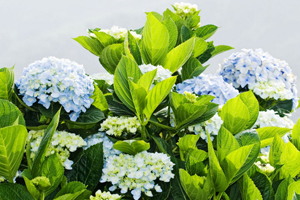
large, medium to dark green, luxuriant foliage with round ball shaped cluster of
flowers. These shrubs are easy to grow and
flowers well in areas with mild winters. A native of Japan and Korea, the shrub
has many varieties and hybrids. One of the remarkable characteristics is that
the same plant can produce both pink and blue flowers depending on the ph factor
or the aluminum content of the soil-blue in acidic soil and pink in alkaline
soil. The blooms stay long as cut flowers.
Planting
The shrub can be propagated
using cuttings which easily grows roots or through dividing from old established
plants. It can also be propagated by layering. Remove one inch wide ring of
outer bark from the middle section of a stem of a hydrangea plant. Bend and
insert this section of the stem in the soil. Let the upper tip of the stem 6-12
inches remain uncovered with soil. Roots will start growing from the part of the
stem under the soil and the plant will be ready to be replanted within 6 months.
Hydrangea's can be replanted on
the ground in a mass or even in a large container in a mixture of composted
organic leaf matter and soil, 8-10 inches thick. The top of the root should be
in level with the surface of the soil and should be watered thoroughly. It
grows well in rich moist but well drained soil. Partial shade to light sun gives
the best results. The plants gets established 4-8 weeks after transplanting. After
that several light application of a complete fertilizer is good during its
growing months.
Prune the stems and flowers
heads and as soon as they begin to fade for splendid foliage, but avoid
pruning after August when the flower buds begin to form. Pruning in late summer
can reduce flowering in the next season.