|
|

Sunday, April 28, 2024
|
|


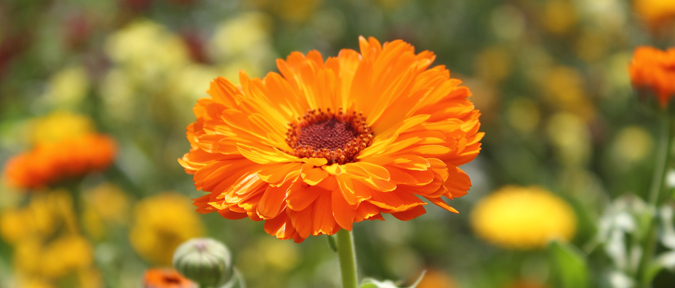 |
Annuals are plants that live for a year or less based on Latin 'annus', meaning 'year'. Annuals are also known as seasonal flowering plants which flower only for three to four months. They are normally grown through seeds. They grow, flower, make more seeds and die, within a year. Annuals are great for creating instant effect and adding color to your garden. Planting annuals also gives you the option of changing the layout of your garden after a year. Most annuals are tender and some of them like phlox look beautiful and are excellent as borders and hedges.
Examples of Annuals are Asters, Dianthus, Bachelor button, Phlox, Balsam, Basil, Cosmos, Petunias, Marigold, Salvias etc.
Biennials 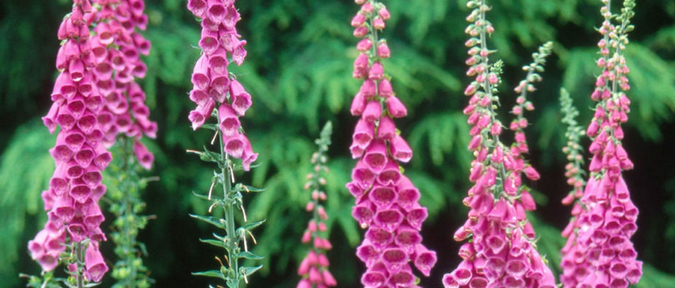 |
A plant that takes two years to grow from seed to fruition, bloom and die or a plant that lasts two years is a biennial, based on Latin 'biennis' meaning ‘two years’. These are also seasonal flowering plants that flower only in the second year of planting. After blooming, they don’t perform well the following year or become untidy and then dies. To have blooms year after year with biennial flowers, you have to plant seeds every year. Examples of biennials are Foxglove, Echium wildpretti etc. Some plants grown as biennials are, botanically speaking, short-lived perennials.
Perennials 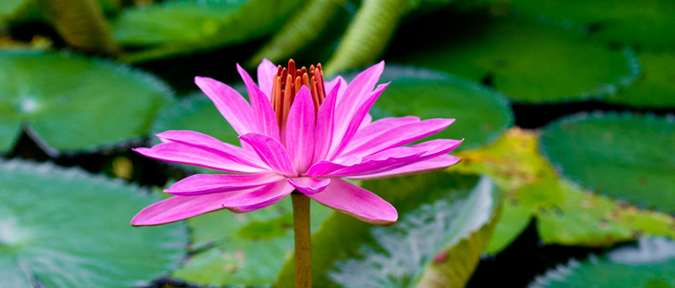 |
The Latin 'perennis' means 'many years'. Perennials are those flowering plants that last longer and keep on flowering. Most take two years until they are old enough to bloom. Examples are Bleeding Heart, Water Lily, Gerberas, Geraniums, Anthuriums etc. Once you plant them there is no need for replanting year after year. But they are not a good option, if you want to change the layout of the garden frequently. Most perennials grow best in slightly acidic soils (pH 6.5 to 7.0) and prefer six to eight hours of sun per day. Watering should be deep, infrequent and applied directly to the soil. This type of watering will promote deep rooting and will help reduce leaf diseases.
Shrubs 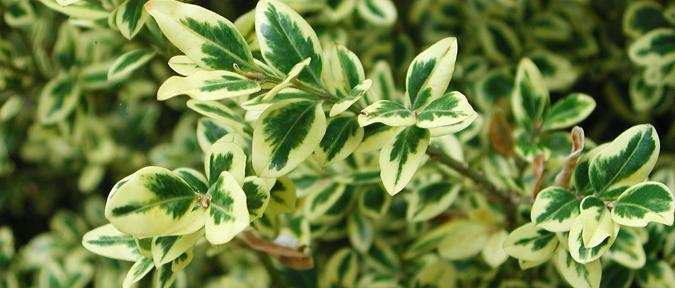 |
Shrubs are woody plants smaller than trees, having a short stem with branches near the ground. Shrubs can be Flowering and Ornamental.
Flowering shrubs are those that flower almost through out the year and will have bushy shape and size. For example, Ixora, Mosanda, Pentas, Hibiscus, Lantana etc. Flowering shrubs provide a long-lived, low-fuss, eye-fetching framework in any garden design. And their rich array of form, foliage, fruit, and flowers can yield year-round rewards.
Ornamental shrubs : Ornamentals are those which will not flower but are best for their evergreen foliage, shapes and ornamental look. These can be trimmed or trained into various shapes and sizes. For example, Juniperus, Tuja compacta, Eranthemum, Aralia, Acalypha Hispida, Crotons etc.
Flowering and Ornamental Trees 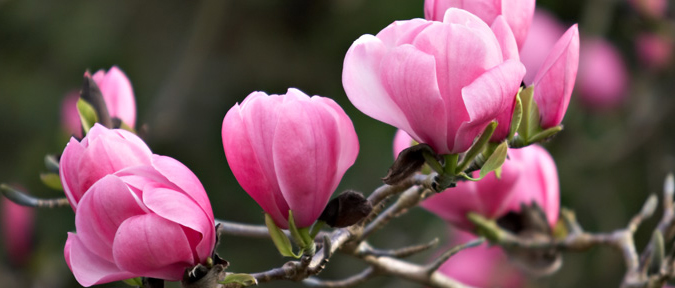 |
Tress can be flowering trees, fruit trees, shade trees, ornamentals etc. Some attractive dwarf/medium height flowering trees or ornamental trees would be ideal for a home garden. Like, Cornus Florida (Flowering Dogwood), Magnolia, Hydrangea Paniculata, Cassia fistula, Jacaranda, Tecoma argentea, Cassia javanica etc. Tree saplings can be planted in trenches filled with a mixture of garden earth and manure in the ratio of 2:1. Support the saplings with stakes. Trees take a number of years to mature. In the first year, remove weak or unruly shoots. In the second or third year remove poorly spaced branches, leaving alone the central trunk. Once they settle, trees need to be watered only once in a while. But the watering should be deep and applied directly to the soil. Shade trees and ornamentals grow on a framework of older branches and need only infrequent maintenance pruning. Prune only dead, diseased or damaged wood or to correct a poor shape. Flowering trees can be pruned after flowering or fruition.
Creepers and Climbers 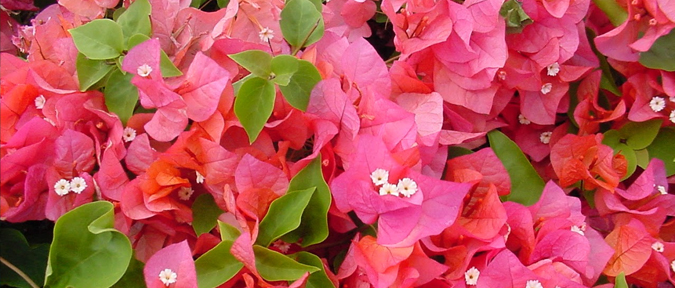 |
Creepers : These plants can be grown along the top of the compound wall or as a cover for walls, or at the entrance as an arch. There are varieties of creepers available like, Bignonia venusta, allamanda, passiflora (passion flower), Jacquemontia. Even Bougainvilleas can be a good creeper.
Climbers : These are the plants with soft stems that grow only with a support. They rely on something else for support; another plant, a wall or trellis. Different types of climbers have devised many crafty ways to hold on to whatever they grasp. Examples are Clerodendrum thomsoniae (Bleeding Heart), Cissus rhombifolia (Grape Ivy), Jasminum multipartitum (Starry Wild Jasmine), Clematis montana (Clematis) etc.
Creepers and climbers can be planted in a mixture of garden earth and manure 2:1, filled to 1 inch depth.
Bulbs 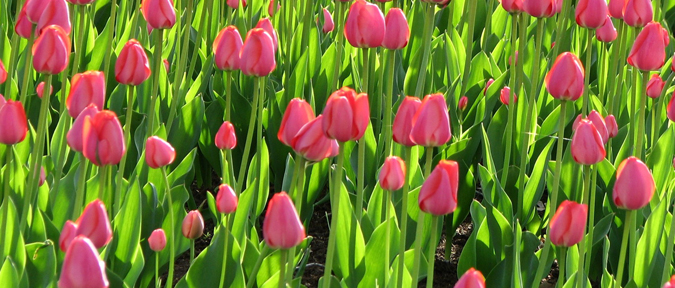 |
A bulb is a specific stem structure which is planted beneath the soil and stays underground. Roots grow down from it, and stem and leaves grow up from it. Most bulb plants have a dormant (resting) period during which there is no growth visible. Bulb plants grow, flower, then the leaves remain for sometime and disappear completely until next year. They are easy to grow and guaranteed to bloom. Examples are Daffodils, Tulips, Bluebells etc. Bulb plants can be Real bulbs: Formulated in layers, with an outer scale (onion, tulip, lily). Corms: Appears like a bulb on the exterior, different structure inside (crocus, gladiolus). Tubers and Tuberous Roots: Bulb stems or roots with food stores which looks like a potato (Potato, Dahlia, Tuberous begonia).
There are Summer-Flowering Bulbs (Tuberous begonia, calla, Canna lily, Dahlia, gladiolus and lily) which are dormant in winter and Spring-Flowering Bulbs (Crocus, snowdrop, hyacinth, Daffodil, Tulip, Iris, allium etc) which when planted in fall remain dormant in the summer.
Questions & Answers |
|||||||||||||||||||||||||||||||||||
| |||||||||||||||||||||||||||||||||||
| |||||||||||||||||||||||||||||||||||
| |||||||||||||||||||||||||||||||||||
| » more... | |||||||||||||||||||||||||||||||||||