You are in : GARDENING » VEGETABLES » Bitter Gourd
Bitter Gourd
| Scientific Name : Momordica Charantia L. |
| Family : Cucurbitacea |
| Colour : Light Green |
| Common names : Bitter gourd, Bitter melon, Bitter cucumber, Karela (Hindi), Balsam pear, Balsam apple |
| Best Season : Throughout the year |
| Nutritional Value : 44 kcal, 5.6 g protein, 290 mg calcium, 5 mg iron, 5.1 mg vitamin A, 170 mg vitamin C per 100 g serving. |
| RECIPES |
Bitter gourd is a fast growing warm seasonal climbing annual, native to South
Asia. Considered one of the most nutritious gourds, the plant has medicinal
properties. A compound known as 'charantin' present in the bitter gourd is used in the treatment of diabetes to lower blood sugar levels.
The plant also has a rich amount of Vitamin A, vitamin C, iron, phosphorus and
carbohydrates. There are several varieties available, having fruits 3-4 inches
to even 12inches in length.
This vine has a slender hairy stem with numerous branches and dense foliage.
The plant grows up to 6 feet tall and develops small, yellow flowers both
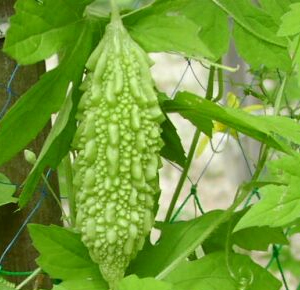
male and female, on the same plant. The fruits are green usually oblong, has an
irregular surface with warts and 8-10 vertical ridges. When ripe, the fruits
turn yellowish orange in colour.
Propagation and Planting :
Mainly a warm season plant, bitter gourd thrives in hot and humid climates.
Propagation is through direct seeding and transplanting. The best medium for the
seeds is a fertile, well drained soil with a pH ranging from 5.5 to 6.7,
enriched with organic matter, such as compost or dried manure. But it will
tolerate any soil that provide a good drainage system. The soil must be prepared
well by adding organic matter before planting.
Two or three seeds can be sown together in a pit 1/2 inch deep. Water
lightly. For better results soak the seeds in water 24 hours before sowing. The
seeds will germinate in 2-3 days. The germinated seeds can be replanted on
raised beds 18-20 inches apart. Transplants should be done in such a way as to
avoid disturbance to the root system. As the plants grow, place poles 2m.high
and give wire or twine supports in rows across the poles.
Regular watering with plenty of water is essential for its growth. Flowers
will start appearing in 5-6 weeks and fruition will occur between two to four
months. Mature fruits are ready to be picked within3 months from planting and
they will be light green and juicy with white flesh but bitter. Pick the fruits
every 2-3 days when they are still at the tender stage. Regular picking is
important as fruits will become more bitter as they mature and it can also
hamper the growth of new fruits.
Leave some fruits to reach full maturity if they have to be reserved for
subsequent crops. When fully mature, the fruits will break open on its own and
release brown or white seeds which can be collected.
Problems and Care :
Vines should be pruned at the tips when female flowers start developing to encourage branching and fast bearing.
Regular fertilizing is essential for its growth. Water immediately after
applying fertilizers.
Bitter gourd is susceptible to many diseases and insect
pests. It is susceptible to watermelon mosaic virus, other cucurbit viruses and powdery mildew, which can be controlled by sulfur dust. Rust disease is controlled by spraying foliage with oxycarboxin.
The fruits are subject to attack by various fruit flies and fruit rots. Pests attack
on fruits can be prevented by wrapping fruits with newspapers, when they are about
a few centimetres long.
Questions of
Questions & Answers |
|
| 1. |
Posted on :
20.8.2013 By : Shibu Daniel , Jaleeb Al Shoukh
|
View Answer (2)
|
Post Answer
|
|
| |
WHAT TYPE OF CLIMATE IS SUITABLE FOR CLOVES TO GROW? |
|
|
| A1: |
how long will it take to grow plant |
| |
Posted By :Sumaiya , vijayanagar | On 8.3.2017 |
|
|
|
|
| 2. |
Posted on :
28.8.2012 By : Srinivas , Hyderabad
|
View Answer (2)
|
Post Answer
|
|
| |
Ever time i grow ladies finger plants, they are stunted, they dont grow more than 1 feet height, they just flower poorly and dry. Does it specifgy any nutrional deficiency?? |
|
|
| A1: |
Use indian cow dung and urine as fertilizer. You should get good result. Also use non-hybrid seeds. |
| |
Posted By :Kiran , Pune | On 23.2.2015 |
|
| A2: |
Request you to kindly purchase good quality of seeds, pls verify your soil is ok or not, if not pls mix soil & compose approx 70/30 share and put ur seeds 3days in sunlight before panting. |
| |
Posted By :Alok Kayal , Secunderabad | On 2.1.2013 |
|
|
|
|
| 3. |
Posted on :
17.1.2012 By : Gangadhar , Secunderabad
|
View Answer (0)
|
Post Answer
|
|
| |
Am planning to cultivate pumpkin and thinking to sow seeds in january month end is there any risk and what will be the average yeild per acre at maturity. |
|
|
|
|
| » more... |