|
|

Monday, October 5, 2026
|
|


| Scientific Name : Beta vulgaris |
| Family : Solanaceae (the Poisonous Nightshade family) |
| Colour : Bright crimson colour |
| Common names : beet, beetroot, chard, mangel-wurtzel, Spinach Beet. Sea Beet. Garden Beet. White Beet |
| Best Season : Throughout the year |
| Nutritional Value : 44 kcal, 5.6 g protein, 290 mg calcium, 5 mg iron, 5.1 mg vitamin A, 170 mg vitamin C per 100g serving. |
| RECIPES |
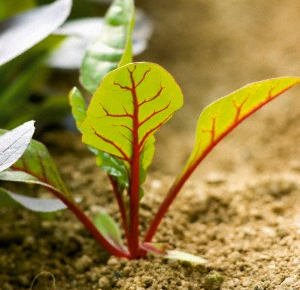 |
Beetroot a biennial plant is a native to Southern Europe. It has dense, elongated goosefoot shaped, glossy, mid-green leaves with bright red veins and dark red stalks originating from the root. Leaves are olive green on the upper surface sometimes red on both sides if kept in bright light Its root is a tap-root, which is edible and pushes deeply in the ground. Roots can be round shaped, cylindrical or tapered. Their colour can be white, yellow or red according to the colour of the flesh. The leafy tops can also be used as a tasty spinach substitute.
Beetroot can also be eaten as a cooked vegetable, it's also great for salads. With a high sugar content it's an ideal ingredient for home-made wine and squash.
Planting and PropagationBeetroot grows in almost all climatic conditions, but degenerate in quality when the climate is very hot or very cold. It can be grown in either full sun or partial shade. Beetroot grows best in deep, well-prepared, well-drained soil and requires nitrogen, phosphorus, potassium and a small quantity of boron. When digging, take care to dig deep and remove stones so that the roots grow without restriction. Pre soaking seeds in warm water for an hour before sowing will speed up germination.
Propagation is done mainly through seeds. Seeds of beetroot can be sown about 1.5 cm deep leaving a distance of about 7cm in between. The space between the rows must be 30 to 40 cm. Mid April- Mid July is the ideal time for sowing though it may vary with climatic conditions of different regions. Beetroot should be grown quickly if growth is checked, the edible roots become tough and indigestible. Watering should be constant but not over the top, and gentle hoeing will keep the weeds away. In dry conditions thorough watering is necessary.
The seedlings will appear in about 15 days, depending on the weather. When the seedlings are about 3 to 5 cm high, thin them to a spacing of 7 to 10 cm to out so that there is only one seedling in one place. Remove the weakest seedlings, leaving only the strongest for growth. The beetroot takes about 2 months to grow from sowing to maturity. The mature height of the plant is about 9 cm.
 Varieties
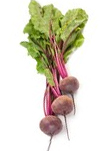
Beetroots vary in color and shape based on variety. It comes with global/ spherical shaped or long tapering roots. Beetroot 'Boltardy' is one of the best varieties which produces large round shaped tender roots of deep red colour and fresh sweet flavour. Beetroot 'Burpees Golden' is globe shaped and golden orange in color. The young leaves are bright green, good to eat when cooked and served like spinach. This variety doesn't bleed like the red beet when cut. Beetroot 'Detroit 2 Crimson Globe' is one of the most popular standard varieties with deep maroon globe shaped beet. Beetroot 'Forono' is long rooted cylindrical beetroot that has a good flavour and gives very good yields. Beetroot 'Kestrel' F1 is a globe-shaped dark red beetroot with a refined crown, high sugar content and bright green foliage. 'Modella' is a variety with almost perfectly round tasty roots. 'Moulin Rouge' is a superb monogerm (single seeded) variety that removes the need for thinning. Ideal as sweet, tender, baby beets with smooth skin and deep internal colouring.
Beetroot 'Pablo' is perfectly uniform, smooth skinned and stands for long periods without becoming woody. An excellent value for money hybrid with very good disease resistance. 'Red Ace' is high quality, smooth rounded beets with intense red flesh and is a very strong grower. Stands well without becoming woody. A superb culinary variety.
Problems and CareBeetroot is relatively free from pests and diseases. Cercospora leaf spot is the most common disease, causing a conspicuous spotting which is easily recognised. The disease is favoured by warm, wet conditions. Rotating crops, allowing 2 to 3 years between planting beetroot in the same garden bed, will help to suppress the leaf spot. Root-knot nematodes cause galls or swellings on the roots. Heavily infested plants are usually stunted, with the main root malformed.
Mangold Flies (Beet Leaf Miner) can be recognised when the leaves develop light brown blisters. Growth is stunted and the leaves turn completely brown and fall off. Rust causes slightly raised, red or brown coloured round spots on the underside of the leaves. Aphids (flies) causes leaves to curl and new shoots to be distorted and can result in less fruits. Instead of using harmful chemical sprays, Alphids can be safely contained by encouraging other insects such as ladybirds and hoverflies which feed on them.
Removing the affected leaf parts as soon as the damage is seen, burning them, isolating the affected plant and treating lightly with diluted insecticides and fungicides goes a long way in checking the damaging effects of diseases and pests.
Weeds should be controlled at all times. Be careful as you weed, as many of the roots of beetroot plants are near the surface. Prune the plants on a regular basis, removing fallen/ dead leaves from the area giving the plant plenty of air especially where the foliage is too thick.
|
|||||||||
Questions & Answers |
|||||||||||||||||||||||||||||
| |||||||||||||||||||||||||||||
| |||||||||||||||||||||||||||||
| |||||||||||||||||||||||||||||
| » more... | |||||||||||||||||||||||||||||
 |
|||
|
|
Tweet | ||
|
|||||||||||||||||||||||||||||||||||