|
|

Sunday, September 20, 2026
|
|


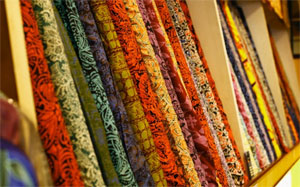 India is home for the cotton crop. It is known as the pearl
of Indian textiles with its cool appearance and soft, light feel. It is a natural
fibre of vegetable origin, like linen, jute or hemp. The art of weaving and
dyeing of cotton had been known in India since 5000 years, and has found mention
in the Epics. It was an export commodity even during very early times. The export
of cotton textiles
has been steadily increasing over the years.
India is home for the cotton crop. It is known as the pearl
of Indian textiles with its cool appearance and soft, light feel. It is a natural
fibre of vegetable origin, like linen, jute or hemp. The art of weaving and
dyeing of cotton had been known in India since 5000 years, and has found mention
in the Epics. It was an export commodity even during very early times. The export
of cotton textiles
has been steadily increasing over the years.
There are approx 23 different varieties of cottons found in India, and thousands of cotton weaving centres. Cotton is used in producing a wide range of items like saris, salwars, bed sheets, covers, napkins, shirts, summer wear, tablemats etc.
The traditional Indian cotton weaving revolves around 'Khadi'. Khadi is a cloth woven by hand using handspun yarn only.
Fine cotton fabrics are also referred as Muslin. 'Mulmul khas', the royal muslin is the fabled and most famous cotton weave. The fabric feels incredibly soft against the skin. Popular in kurtas, sarees and dupattas, the fabric offers unmatched comfort while allowing maximum airflow in humid conditions.

Cotton fabrics are more popular among the people of India. The brilliance of cotton is visible in a variety of weaves in their traditional weaving patterns in the different states of India.
Among elaborate styles in cotton, 'Jamdani' of West Bengal- the light weight, sheer cottons in delicate and subtle hand woven patterns, is one of the best known traditional cotton fabric. UNESCO named Jamdani weaving an Intangible Cultural Heritage of Humanity. Jamdani (inlay) technique was also developed at Tanda in Uttar Pradesh. Orginating from Dhaka, Bangladesh, Jamdani once known as Dhakai muslin holds an official GI (Geographical Indication) status of South Asia.West bengal is also famous for their Tangail cottons and Daccai sarees woven by weavers who migrated from Bangladesh.

Jamdani (inlay) technique of patterning is found in most cotton producing centres like Venkatagiri in Andhra Pradesh , Morangfi in Manipur and Kodialkaruppar in Tamil Nadu.
The fabulous 'Venkatgiri' sarees of Andhra Pradesh, are known for its gold designs in offwhite body colour. Andhra Pradesh is also known for Ponduru Khadi, which is obtained from wild variety of cotton, and Upadha Jamdhani sarees. It is used in shirting and furnishings.
Madhya Pradesh is famous for its delicate weaves in Paithani Technique such as Chanderi cotton and Maheshwari sarees. Originating from the Chanderi town of Madhya Pradesh, Chanderi is one of the fluid and lightweight summer-based cotton fabric.
Rajasthan is known for Kota doria sarees in cotton and silk, which is woven in a small district named Kota. The handwoven Kota Doria cotton sarees are lightweight, has a sheer texture with a lovely grid pattern.
Chickan work in cotton sarees is a traditional embroidery style from Lucknow in Uttar Pradesh.
Also popular are the cotton check lengths of Mamallapuram in Tamilnadu, used as 'lungis' or sarongs by men. Kerala has special Karalkkudi sarees of unbleached cotton with rich broad gold borders and pallus.
The tribal regions of Madhya Pradesh are also known for their cotton saris or Gamchhas. These saris come in a variety of colours and traditional motifs inspired by nature.
CONNECT WITH |
||||||
|
||||||
|
|||||
| ||||||||||
|
|
| Updated on 07/05/2026 |


