|
|

Friday, May 3, 2024
|
|


|
|||
|
|||
|
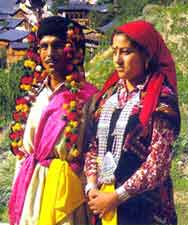
Marriage is an important ceremony in Himachal. The parents
are also the closer elders relatives begin to look around for suitable
matches as soon as the child is old enough. Sometimes The date for the wedding is set in consultation with the priest. In some places the permission of the deities is also sought. Customarily all the preparations for the wedding are to be kept a secret from the bride. In Kinnaur as the wedding party approaches the house, the bride and her friends begin to wail and weep. Marriage customs differ from place to place in Himachal. The bride and the groom are carried in palanquins except in the Lahaul area. The girl touches her father's feet at the time of her departure. People in Kinnaur follow a matriarchal system where all the brothers share a wife and if there are more than six brothers then another may be brought in. All the brothers are looked upon as common fathers to the children. The eldest is known as Teg Bawal and the youngest as Gota Bawal.
A maid (barber's wife or Pachekan) accompanies the bride temporarily from her father's house to help her settle down in the midst of her new family. In Lahaul when the groom departs with the bride the girl friends of the bride block his path till the groom promises them that he will take good care of their dear friend. The day the bride enters the new household, a special Havan is performed under the guidance of the family priest. The bride and the groom cook kheer (rice pudding) and it is served to all the assembled relatives who bless them. At the time of Feroni (the ritual return of the bride after her first visit from her father's house-also known as Dwiragaman) the bride and groom are welcomed with great joy and fed sweets and butter. |
|||


 a
middleman is used as a match-maker known as Roovary, Dhamu or Mazomi.
He finds out the details about the social and financial standing of the
family and the final decision is taken on the basis of the horoscopes.
a
middleman is used as a match-maker known as Roovary, Dhamu or Mazomi.
He finds out the details about the social and financial standing of the
family and the final decision is taken on the basis of the horoscopes.