|
|

Friday, April 26, 2024
|
|


|
|||
|
|||
|
The Apatanis The male members keep long hair and make a knot on the forehead known as piiding after carefully combing with a comb made of bamboo. On the knot, there is a skew horizontally tied with Dinchu (a metal chain). The women wear a number of chain of blue beads on their neck usually. The male members put a particular white bead called Milosampo during occasions and children put on ring of white beads known as Rite comonly. The grown-up male members girdle a loin belt along with a cane matted hanging from the waist like a tail which is called Ahu-Yari. They also put on a number of cane matted ring known as Huring on the waist. The matured women wear well knitted British type skirt and thick blouse with white and black colour. Marriage Apatanis practice monogamy in general but a man may polygamise when he has no male child or his wife is barren or he is of a well to-do-family which can provide sufficient food and shelter or with the consent of his first wife. Polyandry system is totally unknown. The cross cousin marriage and ciciberism practices are not approved. The Apatanis treat the wife of the elder brother as a second mother and the wife of the younger brother as own sister. The customs of the marriage of the Apatanis have no age bar. Marriage is socially approved within the seven villages according to the class and status. Class means 'Gyuchi' and 'Gyutii' and the status means economic status. The marriage in the Apatani society also may be arranged either by negotiations or by elopement or by the capturing. In the negotiation marriage, the boy side must test an omen from chicken liver secretly before taking any decision and carefully examining it.The chicken omen is tested whether she will agree and lead a fruitful life with children and prosperity. If the omen favour it, the two cousin brothers of the boy go to the house of the girl's parents taking the right omen and these two brothers are known as Gyunta.The right omen of the boy is carefully scrutinized by the parents of the girl who also test an omen from chicken liver. If this omen is also right, the girl's parents arrange for a formal engagement.
After the preparation of rice beer and meat, the girl's parents inform the parents of the boy for engagement. On this occasion, the boy along with his Gyunta go to her house and the boy give a Tibetan sword known as Chiri to the parents of the girl. This kind of betrothal is like promising that she is his legal wife from that day. The girl's side also betroths a locally produced cloth known as Mabo-pulye to the boy along with a dainty meal and rice beer. After these formalities, if both the parents wish they may decide for the exchange of rice and mithun for more or less religious importance, which is known as Rutu Pini. The boys side should present a half grown mithun (sido) to the parents of the girl. In return, the boy brings 70 to100 baskets of rice from the brides parents and this rice is known as Arirutu. Next day, there is an occasion known as Pyali Banii. On this occasion, the sisters of the bride bring small baskets containing varieties of rice for the bride and the groom. If the groom's parents wish, some small rites are performed in the house of the groom and this performance is called Amohini. During that ceremony, pig and many other fowls are sacrificed to God and Goddesses who bring life and prosperity to the bride-groom. Apatanis approve the remarriage of both widows and widowers.
|
|||
 |
|||
|
|||||||||||
|
|||||||||||
Related Links |
| ▪ Government |
| ▪ Classifieds |
| ▪ Education |
| Last Updated on : 17 April 2018 |


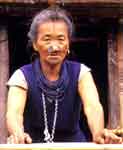 wear the physical marking or decoration in the form of putting of earring,
nose plugs, tattooing etc. Even still born children are decorated before
they are buried. Children are tied a piece of woolen black threads on
their waist, wrist and hinge after birth. The earrings is worn both by
male and female.
wear the physical marking or decoration in the form of putting of earring,
nose plugs, tattooing etc. Even still born children are decorated before
they are buried. Children are tied a piece of woolen black threads on
their waist, wrist and hinge after birth. The earrings is worn both by
male and female.