| Agriculture and Irrigation
 The
shifting cultivation which has come to be known as Jhuming which means
collective farmingoccupies the central position in Arunachal Pradesh
in the field of agriculture. This is the form of cultivation that sustains
majority of the people in the area which is been practiced from earlier
days. The
shifting cultivation which has come to be known as Jhuming which means
collective farmingoccupies the central position in Arunachal Pradesh
in the field of agriculture. This is the form of cultivation that sustains
majority of the people in the area which is been practiced from earlier
days.
Jhuming consist of clearing of a patch of jungle by cutting
and burning after a particular number of years called the jhum cycle,
dribbling seeds into the cleared patch by the help of a poker. Weeding
at least four times,
watching and protecting the growing plants from the
wild animals and birds and finally harvesting a meager mixed
crop, normally just enough to feed the workers - men, woman and children
who had put in about 5 to 6 months of hard labour into the patch.
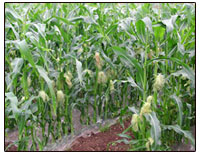
Paddy, millet and maize are the major crops. The indigenous
vegetables are sweet potatoes, brinjal, ginger, chillies, pumpkin, cucumber,
and local cowpea. Pine apple, oranges, lemon, lichi, papaya, banana and
peach walnut, almond etc are also grown in Arunachal. |