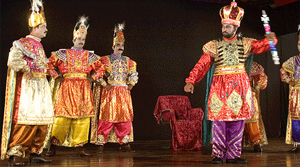
| Chavittunadakam
Chavittunatakam is a Christian dramatic form which was
introduced during the time of the Portuguese in Kerala in the16th
century A.D. 'Chavittu' means the rhythmic steps which accompanies the
recitation of lines in the drama.
In the beginning this theatre was practiced by Latin
Christians. This concept of the western opera type of theatre was inspired
from the miracle plays of the west. The themes presented were also western.
The texts were written in old Tamil. The acting techniques, stage structure
and treatment of the plot were all western. The influence of
Kathakali can be seen in the use of curtains and in certain elements
of the costumes. The influence of Kalaripayattu is evident from the vivacious
fighting scenes.
The characters used to sing their dialogues. The adventurous
themes selected for Chavittunatakam, like 'Charlemangne', 'St. George'
etc gave immense opportunity to use the local martial art form, Kalaripayattu
both for the fighting scenes and the total kinetic design. The participants
of the play used to be very militant in their real life as they were sometimes
used for fighting trespassers on private land. Kalaripayattu has immensely
influenced the form. The forceful stamping of the foot by the actors is
most dramatic and it effectively communicates the basic heroic mood in
most of the themes. Being an opera, gestures are not used in Chavittunatakam
to communicate ideas. The steps, the stamping and the locomotion of the
body sharply coincide with the vocal singing and the accompanying rhythm
on the instrument
chenda creating a very vibrant dramatic effect. Male actors does
the roles of women.
The stage for the performance used to be a low platform
of the strongest wood, about twenty yards long, eight yards broad and
half a yard high. The performance was deemed a failure if, by the time
the play ended, the platform had not been completely wrecked by the tremendous
pounding of the actors feet.
The training in the art was given by the chief Guru
known as 'Annavi' or 'Asan'. He used to give basic martial training to
the actors before introducing them to the text. The texts were preserved
either in palm leaf or paper and they were known as 'Chuvati'. The Annavi
was well versed in Tamil which was the language in which the texts were
written. The number of performers and troupes in this discipline has come
down as the art was not getting adequate encouragement from the public.
But recently there has been a revival of traditional art forms all over,
including this dance drama.
|