Home Site Map Make Your Home Page Suggestions Enquiry
 
Send Pictures
City Guide


 Assam
Major City

Fairs and Festivals

Festivals | Fairs


Festivals - IntroductionBihu -Bahag Bihu | Magh or Bhogali Bihu | Kati or Kangali Bihu | Devaddhvani |Ambubachi Mela | Manasa festival | Rangoli Utsav| Brahmaputra Beach Festival | Other Festivals


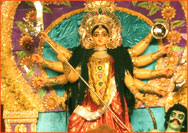
Assamese Hindus observe the Durga puja, the Daul Utsava called Fakuwa, the Janmashtami, the Saraswati, Lakshmi and the Kali pujas. The Muslims observe the Id and the Muharram. In some parts, the snake goddess Manasa is worshipped by tribals and non-tribals alike. 

Bihu

The national festivals of the Assamese, irrespective of caste, creed or religion are the Bihus. It is secular in concept because it is intimately connected with agriculture. There are three Bihus that come off at various stages of cultivation of paddy, the principal crop of Assam. They are Bahag (Baisakh) Bihu, Kati (Kartika) Bihu and Magh (Magha) Bihu.  Among the Bihus, spring festival called Bahag Bihu is the most important. The Bahag  Bihu is also popularly called  Rangali Bihu or the Bihu that cheers, while Magh Bihu is the Bhogali Bihu or the Bihu that one enjoys with food and drink. In between comes the Kati Bihu observed on the last day of Aswin, also called the Kangali or Beggars bihu, for there is nothing much to eat at this time. The term Bihu is traced to the Sanskrit  word Visuvan; i.e. equinox .The bihus take place on a Sankranti day, which means the time when the sun passes from one zodiac sign to another. 

Top

The Bahag bihu

The Bahag Bihu (spring time Bihu) starts on the last day of the  month of chaitra which is also the last day of the Hindu  calendar year and ushers in the new year (mid-April being the beginning of the Hindu calendar year). The first day is called Garu bihu. It is the day of the cattle when bulls, cows and calves are bathed anointed with turmeric, fed with brinjals and gourds and given new tethering ropes. The second day, i.e. new year's day is called Manush bihu. It is the day for men, women and children. New clothes are put on, delicacies are prepared in every household for feasting and alms are given to the indigent. Old quarrels and differences are settled, friends and relatives are visited and entertained with food and presents of hand -woven scarves are made  for near relations and close friends. The bihu continues for seven days. The main activities during the bihu festival besides those mentioned above, are dancing and singing and serving rice-beer to visitors. 

Top

The Magh or Bhogali bihu

The Magh or Bhogali Bihu is celebrated in mid-January on the last day of the month of poush and the first day of magh during which the harvest is gathered. On the Uruka day, i.e. the evening preceding the actual bihu day, young men  build a temporary shelter in the open, collect firewood, often by stealing, which is permissible on this occasion, for a bonfire. A non-vegetarian feast is held at night and at crack of dawn, fire is ceremoniously applied to the meji constructed the previous evening .The meji is a structure built of logs of wood placed in pairs, tier above tier  till they rise to considerable heights and present the appearance of a lofty temple. The male folk of  the entire village or locality gather at the site of the meji and there take place a tea party in which cakes of various kinds are served. The feasting is followed by sports throughout the day. The half-burnt sticks and ashes of the meji are strewn on the fields and at the root of the fruit trees as they are believed to increase fertility.

Top

The Kati or Kangali bihu

The Kati or Kangali Bihu is held on the last day of Aswin (Sep-Oct) coinciding with the autumnal equinox. It is called Kangali (poor) because there is not much to eat at this time of the year. It is a bihu where people of Assam (particularly ladies) worship, pray and welcome Goddess Lakshmi (Goddess of Prosperity) home, lighting earthen mustard oil lamps in the fields where paddy is growing, in front of the sacred tulasi (basil) plant, store (bharal ghar) etc. This ritual continues for a whole month. 

Although Bihu is observed in all parts of Assam, in Goalpara and Kamrup districts of lower Assam and in Darrang district of central Assam, where it is called Domahi it is not accompanied with dancing as in upper Assam. 

A festival called Bhatheli in some parts and Sori in others, which is celebrated in the first week of Bahag can be regarded as a substitute for Bihu in these parts. A special feature of the festival is a colourful fair when people especially young men and girls in new and gay attire from all the neighbouring villages flock together.

Top

Devaddhvani

Devaddhvani is another noteworthy festival held once a year at Kamakhya. It lasts three days from the last day of Sravana to the second day of Bhadra. It is connected with Manasa or Maroi puja. Manasa the serpent goddess is worshipped  by many people of Goalpara, Kamarupa, Darrang and Nowgong districts of Assam. In Sualkuchi and Pasariya villages, the festival continues for five days.

Top

Manasa Festival (Debaddhani Festival)

Manasa festival which commence on September is celebrated at Kamakhya Temple in honour of the Snake goddess Manasa also called 'visahari' (the remover of poison). The deity is worshipped during diseases and epidemic. Click here for more details

Top

Rangali Utsav

Rangoli Utsav is one of the most important festivals in Guwahati, coinciding with Bohag Bihu. It is celebrated in the month of April at Srimanta Sankardeva Kalakshetra to welcome the onset of the agricultural season. Click here for more details

Top

Other Festivals

Deul of Barpeta, is another festival; celebrated by Assamese. Deul is Doul Yatra which synchronizes with Holi. Buddhist,Shans and Burmese  on the borders of Assam have their two great festivals, Pocham and Pochi, in  honour of the Buddha.

Top

[Back]


Quick Links - Webindia123.com
Services
Hobbies
 
Entertainment
Classifieds
Career / Education
UK, USA, Canada
Utilities
E-Booking
India Reference
 
IndianStates
Pradesh

Copyright 2000- Suni Systems (P) Ltd.
All rights reserved