| Agriculture
 Agriculture is the main occupation of the people and along with the allied
occupations it accounts for 63 percent of the states work force.
Agriculture is the main occupation of the people and along with the allied
occupations it accounts for 63 percent of the states work force.
Rice is the staple diet of the people and cultivation of rice is the main
occupation of those engaged in agriculture. Different pulses, jute, tea
and fruit cultivation are the other agricultural crops. Sugarcane, potatoes,
cotton, oil seeds, coconut and arecanut cultivation is also practiced
on a substantial scale apart from the horticulture. But 67 percent of
the gross cropped area is taken up by rice cultivation, of this about
67 percent again is taken up for the cultivation of Sali paddy on about
16-17 lakh hectares of land.Both the centre and the state are engaged
in giving agriculture a big thrust and a second green revolution is to
be brought about in the north east. Jhum cultivation or shifting cultivation,
under which the tribal farmers burn selected areas of forest land and
use it for cultivation in a cyclic period, is a problem in Assam. Confined
to its two hill districts which are inhabited by tribal people, efforts
are being constantly made to wean the people away from this rather expensive
form of cultivation.
Among fruit crops, Assam has oranges and other citrus fruit, bananas,
guavas, pineapples and mangoes. There are extensive plans to expand the
cultivation of these fruit products and market them to bring greater benefits
to the farmers. The gross cropped area in the state is about 35 lakh hectares
out of which rice cultivation alone accounts for 26 lakhs. Forests are
an important part of Assam's economy. Timber is a major product of the
states extensive forests and bamboo is another product, bringing Assam
substantial revenue and adding to its wealth.
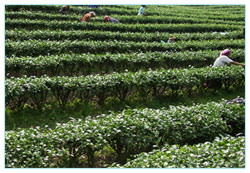
Assam is rightly known for
its excellent tea which is one of the major cash crops . About 15 percent
of the world's total output of tea comes from the tea gardens of Assam,
which provide employment to more than a million people. More than half
of that in direct form in the tea gardens and factories turning green
leaves into dry tea for home and hotel consumption. Tea cultivation occupies
a little less than a tenth of the cultivated area of Assam and 75 percent
of the tea gardens are located in the Brahmaputra districts of Darrang,
Sibsagar and Lakhimpur. Cachar district accounts for 20 percent of the
balance and the remaining 5 percent being accounted by the lower Brahmaputra
valley.Guwahati centre in Assam has become the biggest centre
of auction of CTC tea in the world.
|