|
Dance
 Dances
by the folk , to the accompaniment of music, whether pertaining to religious
observances or special family occasions like births and marriages are important
elements in the life style of the gay Ladakhis. Dances
by the folk , to the accompaniment of music, whether pertaining to religious
observances or special family occasions like births and marriages are important
elements in the life style of the gay Ladakhis.
The
Ladakhi New Year is a special occasion for spectacular dances. It is celebrated
traditionally with pomp and gaiety, on the first of the 11th Tibetan lunar
month. Then there is a great Festival of Leh, held at the end of the 12th
Tibetan month. During marriages also the common denominator is music, dance and
attendant festivities.
The
festival of prayer which falls four weeks after the new year festival excels
the latter in splendor. This ten day festival is remarkable for dances and other
religious spectacles. The star attraction is the three-day festival at Hemis
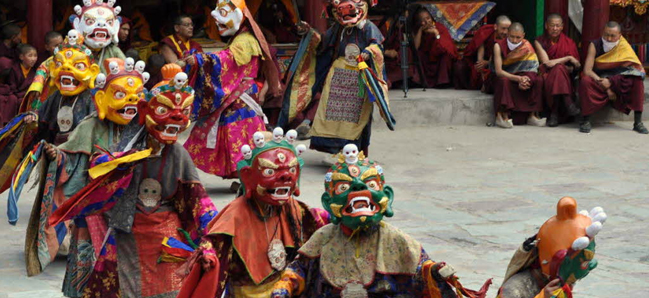
Gompa for its great spectacle of masked dances and plays by Lamas.
The
men and women who participate in these dances wear colourful costumes, i.e. long
gowns set off by special headgear. The quilted skull caps worn by women, their
ears covered by semi-circular, red, woolen lappets are complemented by the
quaint headgear of the men and Lamas. The songs are so worded and loaded with
refrain that these lend themselves easily to slow, rhythmic dance movements.
The
so-called 'devil dances' constitute an important element in the
social entertainment of the Ladakhis. The uproarious song-and-dance mirth,
created by these mask dances, which invariably depict the victory of the right
over evil, is kept by the all-round consumption of huge bowls of 'chang',
Ladakhis own country liquor. Song-and-dance entertainment, enlivened by liberal
doses of chang, mark the finale of birth and marriage celebrations.
|