You are in : GARDENING » Palms » Sago Palm
Sago Palm
| Scientific Name : Cycas Revoluta |
| Family : Cycadaceae |
| Genus : Cycas |
| Common names : Sago Palm tree, King sago, Palm cycad |
| |
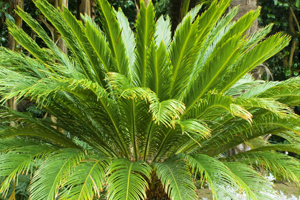
Sago palm is a cycad,
the oldest known of all living seed plants. This palm is slow growing and the
older specimen will develop a thick, stout trunk about 9" and reach a height
of 6 feet. It has a crown of dare dark glossy green feathery pinnate fronds
(leaves) about 30" long growing in a circular pattern. The leaves are laden
with numerous thin stiff and pointed, leathery leaflets about 4" long. Rather
than continuously adding foliage, sagos produce a periodic 'flush' of new leaves,
called a 'break'. Seeds are brownish-red, the shape of a flattened marble, about
30 mm( 1.25 ins) across. Also called Living fossils, this palm is native to
the Far East. It is suitable both for indoor and outdoor use.
Cycads are dioecious, having both males and females. The female inflorescence
is feather like, later forming a tightly packed seed head, closely covered by
whitish miniature leaves. The male cone is pineapple shaped. When it is time
to pollinate, females sagos begin to flower and male sagos produce cones.
Sagos grow well in full sun but the rate of growth is extremely
slow. The soil for growing this palm should be well drained and rich in humus.
Propagation of sago palms is either by seed or by removal of offshoots or pups.
Soak seed in water for several days, then remove the red skin, but leave the
white hard seed coat. Plant the seed in well drained soil. Keep the plant in
warm, lightly moist conditions and in filtered sunlight. Do not keep in wet
conditions. Seeds will germinate within 3-9 months. But it may require more
than three years of growth to reach a small bulb size of 1" in diameter.
Remove the pups growing at the base or along the sides of mature
sagos. Remove all the leaves and roots from the pups. Allow the raw spot to
dry and plant in well-drained soil or a sandy mixture so that half the ball
or trunk is below soil level. Water thoroughly to ensure rapid growth. Roots
will slowly begin to form and the first leaves appear several months later.
At that time, apply a mild dose of fertilizer and water when almost, but not
completely dry. Before repotting, allow the new plants to form a good root system.
Questions of
Questions & Answers |
|
| 1. |
Posted on :
19.1.2010 By : larie Kent , hawaii
|
View Answer (0)
|
Post Answer
|
|
| |
How do i groom my seal wax palms. Can I take the new growth out with roots and try to get them to grow with out hurting the main trunk. they are eight feet high and I just planted them |
|
|
|
|
| 2. |
Posted on :
13.9.2009 By : monicah1981@yahoo.com , santa barbara
|
View Answer (1)
|
Post Answer
|
|
| |
I just bought two majesty palms at home depot.I heard there shade plants and love water. How true is this and what kind of soil should I put them in? There 10-12 feet tall,and there going in the ground.and How much cold can they handle at night time |
|
|
| A1: |
I have seen these planted in the ground here and they were huge. They were positioned on the southwest side of the house(protected from north winds which can be severe here). My guess to minimum temperature would be 40 degrees. Remember: these are topical NOT desert palms which can take colder temps. Hope I have helped! |
| |
Posted By :Robert , Houston, Tx | On 6.1.2011 |
|
|
|
|
| 3. |
Posted on :
13.6.2009 By : Jarnail , Ludhiana
|
View Answer (0)
|
Post Answer
|
|
| |
Can u get me guide to growing Palm Majesty in our home lord.kindly explane it is possible thats possible then do it. |
|
|
|
|
| » more... |