Odissi - The Technique
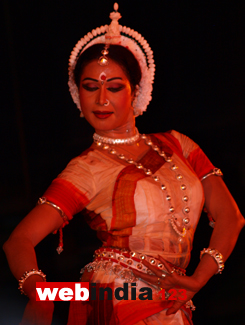
Odissi treats the human body in terms of the three bhangas along
which deflections of the head, torso and hips can take place. The body is
divided into two equal halves and the technique is built up on the principle of
an unequal division of weight and the shift of weight from one foot to the
other. Units of movement of
the head, the torso or the hips and the knees are important here. The characteristic
feature of this dance style is a hip deflection. The dvibhanga is greatly
emphasized here. The tribhanga is one of the most typical poses of Odissi. The
tribhanga is achieved by a sharp deflection of the hip from the horizontal Kati
sutra, an opposite deflection of the torso and the head deflecting to the same
side as the hip. The natavara bhangi in Odissi dancing is the familiar tribhanga
of the Indian sculptural tradition.
Foot contacts are similar to those in Bharatanatyam employing
both the flat and the toe-heel contacts. The toe touching the ground (kunchita)
and the heel stamping the ground (anchita) foot positions of the
Natyasastra are used repeatedly. There is a rare use of the combined toe-heel
movement characteristic of Bharatanatyam in the Kuditta mitta sequences. There
are extremely complex rhythmic sequences based on the use only of the heel.
These movements of the anchita foot known as gothi in Orissa, are
distinctive to that style. Apart from these differences in the manner of the
foot contact i.e. the use of the toe, the use of both heel and a comparative
absence of the toe heel movement, there is also a difference in the methodology
of using knees in Odissi dances. On account of the deflection of hip
in tribanga position of the knees is outturned and the
toes point. The heels of the both feet, however, meet. The torso is
bent the other side, so that while there is a terseness of the lower half there
is a liquid lyrical flow of the upper body. The torso is used in two
sections the upper and the lower. The manner of using the torso gives Odissi
a distinctive kinetic style. The three main positions from which movement
emerges in Odissi are first the samapada i.e. the standing equi-balanced
equivated erect position without any kind of a suggestion of a frontal bend. The
second is the tribhanga. The third and the most important in a way is the Chauka.
Here the heels face the centre, the toes point outwards and there is a distance
of about two feet between the two heels. The knees are out turned, the thighs
are bent. This is akin to the perfect grand pile of western ballet. The Odissi
dancer places the feet flat with the entire sole in contact with the ground. The
square is the basic geometrical motif here, and from the square emerge other
movements whether they are half circles semi-circles or partial figures of 8.



