|
|

Friday, May 10, 2024
|
|


|
|||
|
|||
| Society
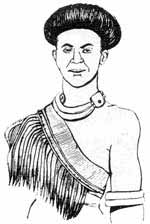
The organization of the village community differs from tribe to tribe. The Angami, Lotha, Rengma and Ao villages have a democratic structure. Among the Angamis, although the chief is chosen for his wealth, physical prowess and skill in diplomacy, the decisions are taken collectively by all the villagers. The Semas have a system of hereditary village chief. The chief is the overlord of the village and all others are 'mighimis' or dependants. The chief looks after him, gives him land, helps him financially, protects him and even arranges a bride for him if the mighimi is not in a position to pay the marriage price. On the other hand, the mighimi looks upon the chief as his father, works for him, fights for him and obeys him in all matter of village administration. They are also under an obligation to work for 12 days in a year in the chiefs field and it is an offence to leave the village without the chiefs permission. The Chang polity resembles that of Semas, but the Chang chief do not have the monopoly of the land so are not as powerful as their Sema counterparts. The Konyak chief called 'Ahngs' are sacrosanct bodies. They wear special dresses and are richly ornamented and they are given great respect and are considered sacred.
Among the Aos, the village community is governed by a Council of Elders (Tatars) each village is a small republic and they are thoroughly democratic. It was customary for the eldest son of a Sema chief to establish a village of his own out of his fathers estate. Incase, the village did not admit to further division, the son could go to another area, clear or conquer that place and establish his authority. Thus the Sema society encouraged expansionist colonization. After forming a new village, the colonists sacrificed a pig at the site and poured into the village well water stolen from the well of a prosperous village. |
|||


 In
earlier days, Inter-village feuds between the tribes were the order of
the day. So the selection of the sites for the village was largely influenced
by considerations of defensive strategy. They were usually built on top
of the hills, well fortified with stone walls, sharp pointed bamboo spikes,
heavy wooden gates and deep ditches around. The remnants of such defenses
can still be seen in villages like Kohima or Khonoma. The villages
were named after some local characteristic of the site or after their
chief or the person who establishes the village.
In
earlier days, Inter-village feuds between the tribes were the order of
the day. So the selection of the sites for the village was largely influenced
by considerations of defensive strategy. They were usually built on top
of the hills, well fortified with stone walls, sharp pointed bamboo spikes,
heavy wooden gates and deep ditches around. The remnants of such defenses
can still be seen in villages like Kohima or Khonoma. The villages
were named after some local characteristic of the site or after their
chief or the person who establishes the village.