|
|

Friday, May 3, 2024
|
|


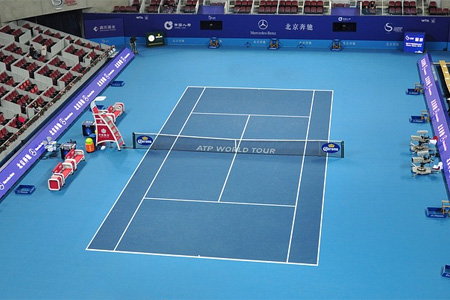
The maximum number of sets in a match shall be 5 for men and 3 for women. A set usually consist of six games. But it shall be extended where necessary.
The choice of sides and the right to be Server or Receiver in the first game shall be decided by toss. The players shall stand on opposite sides of the net; the player who first delivers the ball shall be called the Server and the other the Receiver.
The service is delivered from the right court in every game. The server shall project the ball by hand into the air in any direction and before it hits the ground strike it with his racket and the delivery shall be deemed to have been completed at the moment of the impact of the racket on the ball. In delivering the service, the server shall stand alternately behind the right and left courts.
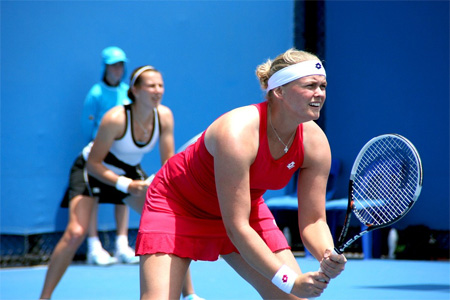
In doubles game, the order of serving shall be decided at the beginning of each set. The pair who has to serve in the first game of each set shall decide which partner shall do so and the opposing pair shall decide similarly for the second game. The partner of the player who served in the first game shall serve in the third. The partner of the player who served in the second game shall serve in the fourth and so in the same order in all subsequent games of a set.
At the end of the first game the receiver shall become the server and so on alternately in all the subsequent games of a match. If a player serves out of turn, the player who ought to have served shall serve as soon as the mistake is discovered but all the points scored before such discovery shall be reckoned. If a game shall have been completed before such discovery, the order of the service remains as altered. A fault served before such discovery shall not be reckoned.
The player shall change ends at the end of the first, third and every subsequent alternate game of each set.
The service is a let;
1) If the ball served touches the net, strap or band and is otherwise good 2) or after touching the net, strap or band, touches the receiver or anything which he wears or carries, before hitting the ground 3) if a service or a fault be delivered when the receiver is not ready.
In case of a let, that particular service shall not count and the server shall serve again but a service let does not annual a previous fault.
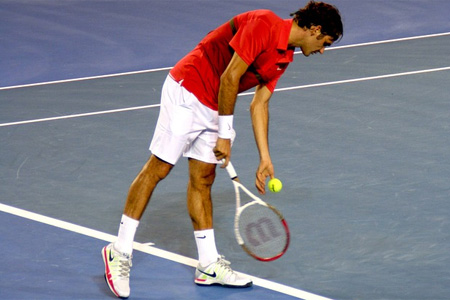
A service is said to be fault if,
the ball is not delivered properly
the server changes his position by walking or running during the delivery of the service
the server touches any area other than that behind the base line within the imaginary extension of the centre mark and side line with either foot
the server misses the ball in attempting to strike it
if the ball served touches a permanent fixture (other than the net, strap or band) before it hits the ground.
In doubles game in addition to this, the service is a fault if the ball touches the server's partner or anything which he wears or carries.
If a fault occurred for the first time during the service, the server shall serve again from behind the same half of the court from which he served that fault.
|
|