|
Mim Kut
The Mim Kut
was a festival celebrated before the hard work in
the jhum was over. It would take place in September.
The festival lasting for
one or two days would be in memory of someone who had died during the previous
year. Fresh vegetables, maize bread, necklaces and cloth would be placed on the
memorials of the dead as offerings to them. It was believed that their spirits
would revisit their house during the Mim Kut. Zu would be taken in houses in
which someone had died during the year. On the second day everybody would have a
meal of bread.
Pawl Kut
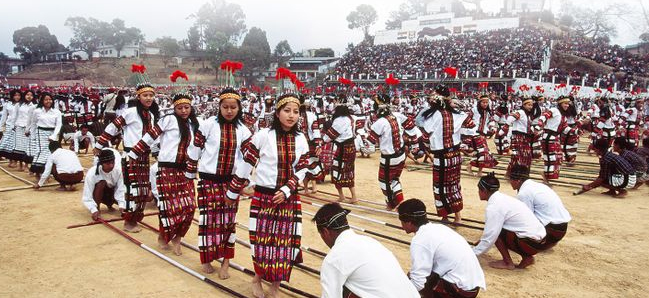
Pawl Kut was the harvest festival which was celebrated after the
village had gathered its harvest. Lasting for one to two days, the villagers
would feast and dance in thanksgiving for the harvest.
There is a legend regarding the origin of this festival. In the
olden days when the Mizos were living to the east of the Tiau river in the chin
hills, which is now in Burma, there was famine for three consecutive years. In
the fourth year the people had a bumper crop. The people believed that this was
a blessing of the supreme god and as a thanksgiving they celebrated Pawl Kut.
It was customary for everyone to eat meat and eggs during Pawl
Kut. A few days before the day is fixed for the feast, the men would go out hunting
wild animals, trapping birds or fishing. One would get as much meat as one's
means would permit. Even the poorest would kill at least a fowl for the
household feast. As in Chapchar Kut, mothers and children would gather together
at the Lungdawh bringing with them plates of rice, boiled eggs and meat and feed
one another performing Chhawnghnawt. The youngmen and girls would also attend
the Chhawnghnawt. The men would gather in the houses of well-to-do persons and
Zu would be drunk. The festivities were followed by Eipuar Awm Ni or the day of
rest.
As Christianity spreads in Mizoram these festivals gradually
faded out.
|