Mohiniyattam
Origin
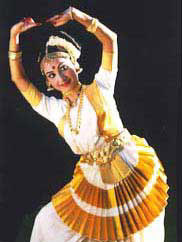 The Devadasi dance tradition
which developed through the temple danseuses is an important form among the
dance patterns of India. Mohiniyattam in
Kerala took shape in the tradition
of Devadasi dance which later grew and developed a classical status.
The Devadasi dance tradition
which developed through the temple danseuses is an important form among the
dance patterns of India. Mohiniyattam in
Kerala took shape in the tradition
of Devadasi dance which later grew and developed a classical status.
The
special style of dancing developed by the Devadasis in Kerala was originally
called 'Teviticci Attam'. Devadasis in Kerala were known by the general
name 'Teviticci' which literally means - woman who serves
at the feet of God
(Teviticci
= Tevar + Ati + Acci; Tevar = God, Ati = feet; Acci = woman). Their dance was
called 'Teviticci - Attam' (Attam = Dance). This later came to be known as Mohiniyattam
by about 16th century AD. The word 'Mohini' literally means a maiden who excites
desire or steals the heart of the on looker. It is a solo female dance (in a
single costume ) in which the striking features is the musical melody and rhythmical
swaying of the dancer from side to side and the smooth and unbroken flow of
the body movement. The dance is focused essentially on feminine moods
and emotions.
There is the well known
Puranic story of Lord Vishnu taking on the guise of a 'Mohini' to enthrall people
both in connection with the churning of the milk-ocean and with the episode
of the slaying of Bhasmasura. In the Bhasmasura story, 'Mohini' towards the
end of her dance, persuaded the Asura to place his own finger on his head unwittingly
to his own undoing. This episode seems to be picturesquely represented in the
first item of the Mohiniyatam called 'Colkkettu' which begins with a pose
of the dancer showing with her right hand, the murder of 'Suchimukha' with her
first finger pointing to her own head. So Vaishnava devotees could have given
the name of Mohiniyattam to this art form.
'Colkkettu' was also
considered to be a dance pattern sacred to Lord Shiva. There is a sloka
in praise of Siva towards the end of the text used for 'colkkettu' in
Mohiniyattam.



