MUKESH CHANDRA MATHUR
Singer
Mukesh Chand Mathur alias Zoravar Chand popular as the 'man with the
golden voice' was one of the legendry singers in the Hindi Film Industry.
His, was one mellifluous voice which had the power to cast a spell on
listeners.
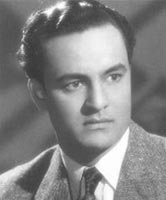 Born on July 22, 1923, in Delhi, Mukesh was interested in acting and
singing right from childhood and was a great fan of Kundan Lal Saigal, a
famous singer/actor of those times. But Mukesh's fate was to become popular as a singer. Mukesh, was first noticed
by Motilal, a popular actor of his times and a distant relative,
when he sang at his sister's wedding. Motilal arranged for his voice
training in 1940 in Mumbai under Pandit Jaganath Prasad.
Born on July 22, 1923, in Delhi, Mukesh was interested in acting and
singing right from childhood and was a great fan of Kundan Lal Saigal, a
famous singer/actor of those times. But Mukesh's fate was to become popular as a singer. Mukesh, was first noticed
by Motilal, a popular actor of his times and a distant relative,
when he sang at his sister's wedding. Motilal arranged for his voice
training in 1940 in Mumbai under Pandit Jaganath Prasad.
Mukesh's debut as a singer was in the film 'Nirdosh' in 1941 in which he
also acted as a hero, but the movie did not do well at the box-office. This
was followed by acting in films like 'Dukh-Sukh', 'Aadab Arz' and some other
films that did not get completed. Years later in 1953, he again did a stint
in acting in the film 'Aah'.
After Nirdosh, though he sang for films like 'Us paar', 'Murti' etc,
his popularity as a singer came with the song 'Dil Jalta Hai To Jalne De',
picturised on Motilal from the movie 'Pehli Nazar' (1945). This song almost
imitating the legendary singer actor K.L. Saigal brought him instant
popularity. From then on, there was
no looking back for Mukesh.
It was under Music directors like Naushad and Anil Biswas that
Mukesh really blossomed. He developed a style of his own with films
like 'Mela' (1948), 'Anokha Pyar' (1948 Song-'Jeevan sapna toot gaya')) and
'Andaaz' (1949). His rendering of tragic numbers as well as light and cheery
ones were equally good. He gave his voice for most of the songs of Raj
Kapoor and Manoj Kumar which made him famous as Raj Kapoor's ghost voice.
His classic numbers include popular songs like 'Awara Hoon' ('Awara', 1951),
'Jaane Na Nazar' ('Aah', 1953), 'Mera Joota Hai Japani' ('Shri 420', 1955),
'Yeh Mera Deewanapan Hai' ('Yehudi', 1958), 'Dil Tadap Tadap' ('Madumati',
1958), 'Kisi Ki Muskurahaton Pe Ho Nissar' ('Anari', 1959), 'Aa Ab Laut Laut
Chalein' ('Jis Desh Mein Ganga Behti Hai', 1960), 'Dost Dost Naa Rahaa' ('Sangam',
1964), 'Jaane Kahaan Gaye Wo Din' ('Mera Naam Joker' 1970), 'Kahin Door Jab
Din' ('Anand', 1970), 'Kabhi Kabhie Mere Dil Me Khayaal Aataa Hai' ('Kabhi
Kabhie',1976) etc which are still
popular. Mukesh's last song of his career was for the film 'Satyam Shivam
Sundaram' (1978) prerecorded but released after his death.
Among the other music directors for whom Mukesh worked with, were Shankar
Jaikishen, Laxmikant Pyarelal, S.D. Burman, Kalyanji Anandji, Salil
Chowdhury, Usha Khanna etc. He received the National
Award for the song 'Kahin baar yun bhi dekha hai' for 'Rajnigandha' (1974)
and 'Filmfare Award' for best playback singer four times.
Mukesh fell in love and married a young Gujarati girl
Saral in 1946, and they had two boys, Nitin and Manish, and three girls,
Rita, Nalini and Nimitra. Mukesh
passed away on August 27, 1976, following a cardiac arrest in Detroit, US,
where he had gone for a concert.
Mukesh, along with Mohammad Rafi and Kishore Kumar was considered one
among the finest and most popular Hindi film playback singers of their
times. Even though a number of singers after him
including son Nitin has tried his style of singing, Mukesh's immortality
remains intact even three decades after his death with his melodious and
evergreen numbers still having an impact on music lovers.