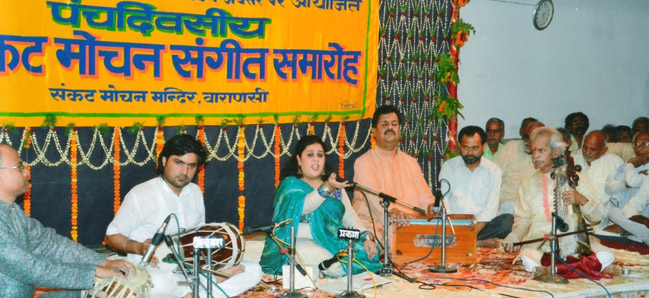
| Festivals
The important Hindu festivals
of Uttar Pradesh are Navaratri, Diwali, Shivaratri, Raksha Bandhan and
Janmashtami.
Karva Chauth: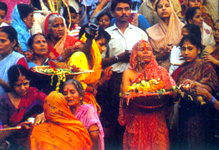 The
festival falls nine days after Dussehra, on the fourth day of the dark fortnight of Kartika. Honouring an age-old Hindu tradition, Karva Chauth is held by married Hindu woman
for the longevity and prosperity of their husband. Karva means
earthern lamp or pot and chauth means fourth representing the 4th day of
the month. The
festival falls nine days after Dussehra, on the fourth day of the dark fortnight of Kartika. Honouring an age-old Hindu tradition, Karva Chauth is held by married Hindu woman
for the longevity and prosperity of their husband. Karva means
earthern lamp or pot and chauth means fourth representing the 4th day of
the month.
The day is spent
in complete fasting till the rise of the moon. Then the moon is worshipped by
offering water by the women. They commence their fast, which includes not even drinking water, from sunrise, and break it only after they see the moon.
Traditionally, women folk who keep the vrat see the moon through a sieve
and after seeking blessings, the wives are given the first sip of water
and the first morsel of food by their husbands.
Married women across North India start their preparations for 'Karva Chauth' from
a week before by purchasing cosmetics (shringar), jewellery and puja items--the karwa lamps, 'matthi', henna and the decorated puja "Thali" (Plate).
They apply 'henna' on their hands a couple of days before 'Karva Chauth'.
On this occasion, mothers-in-law give gifts to their daughters-in-law, which are called 'Sargi'.
If wife prays for 'longevity' for her husband on 'Karva Chauth' then husbands should also take oath of "sincerity" towards her on this auspicious day.
'Karva Chauth,' is celebrated annually, on the fourth day of the Kartik month.
Four days later, is the festival of Ahoi Astami, when women fast
and pray for the welfare of their children. Followed five days later,
by a series of festivals culminating in Diwali, the festival of lights
on Kartika Amavasya.
|