You are in:
Pets  Birds Types Of Birds
CANARY
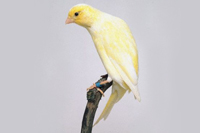
Canaries
are small, lively birds mainly with yellow plumage, known for their sweet
and sparkling harmonies. There are many color variations of the
small, active Canary. They were originally introduced to European bird
fanciers in the 1500s by the Spaniards who discovered them in the Canary
Islands off the western coast of Africa. Canaries measure 5" from
head to tip of the tail. Canaries generally don't like to be handled although
there are a few rare cases. They are better as pets to be watched as opposed
to being held. Canaries don't require companionship of their own kind,
as long as their human companion talks with them. The beautiful song of
the male bird makes the canary an entertaining pet.
| Origin : Canary Islands. |
| Genus : Serinus. |
| Foods :Canary seed and green vegetables
such as spinach. For most kinds of canaries, color-feeding (feeding food
with dyes to improve plumage) is recommended. |
|
Life Span :Maximum 20years.
|
Roller Canary
The common yellow colored
canary that is considered to be the best singer. The Roller Canary is
particularly adept with a three-octave range. |
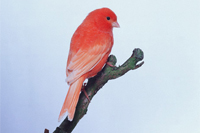
Red Factor
A brilliant red colored
canary, which was bred with another type of finch (any small seed eating
song bird) to introduce a red color factor into the canary's genetic structure.
Requires feeding a special diet to keep the intense coloring.
|
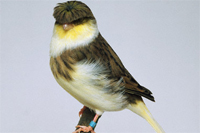
Crested Canary One
of the oldest breeds, with a unique crest or tuft of feathers at the crown
of the head.
|
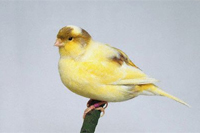
Border Canary
Yellow with variegated
patches of white, green, or brown color bordering the wings. |
Questions of
Questions & Answers |
|
| 1. |
Posted on :
13.4.2016 By : Adwitiya Das , West Bengal
|
View Answer (1)
|
Post Answer
|
|
| |
Hi, I want to get an eagle as a pet. But I cant find where to buy a baby eagle. So please let me know the laws and procedure & place of getting the baby. |
|
|
| A1: |
Apart from indian birds you can buy any kind of bird but regarding to law where you want to buy the bird.All foreign bird we can get from large pet forms in india and also by using websites like indiamart in indiamart you can find some wholesellers and breeders |
| |
Posted By :mahesh , Guntur | On 11.9.2016 |
|
|
|
|
| 2. |
Posted on :
24.7.2015 By : rahul gautam , utter pradesh india
|
View Answer (0)
|
Post Answer
|
|
| |
I have pet RED VENTED BULBUL
her tail is breaking almost . Feathers are left. What should i do? |
|
|
|
|
| 3. |
Posted on :
22.3.2015 By : Vaishali , Mumbai, India
|
View Answer (0)
|
Post Answer
|
|
| |
I have two pairs of lovebirds and recently I shifted them to bigger cage. But shifting they became very noisy and not ready to come down to eat. If I hand feed them than only they eat and drink. Is it because of change in their cage? I shifted them on Wednesday, March 18, 2015. They are active and if hand feed eating well. Please guide me what to do so they start eating themselves |
|
|
|
|
| » more... |