Home Site Map Make Your Home Page Suggestions Enquiry
 
Indian States and Union Territories

Maharashtra
      Land
      History
      People
      Festivals
      Economy
      Arts
      Tourism
      Tell A Friend
      Feedback

Metro Cities

      Calcutta
      Chennai
      Delhi
      Mumbai
      More Cities

ARTS

Dance | Craft


DANCE

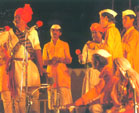
Maharashtra has a lively tradition of song, dance, music and theatre. Vasudev, a dance form, is performed by people believed to be  incarnation of Lord Krishna. Bedecked in the distinctive headgear of peacock feathers, performers sing Vasudev geets and with nimble, delicate dance steps, whirl around presenting anecdotes from Lord Krishna's life in exchange for alms. Soothing, melodious notes float through the villages, particularly near Jalgaon and Dhule. On auspicious occasions like the birth of a child, dancers might hold night- long performances called gondhals. Elsewhere, rustic actors could be narrating lively stories through the bharud, an enactment of the written musical compositions of poet- saints, and singers could be crooning powadas, inspiring ballads. The lavni performed by women, is sometimes called the queen of Marathi folk music and dance. It is incorporated in slapstik tamasha, and is perhaps one of the most popular folk forms. Marathi theatre itself has evolved over the years, and is now a mature form of communication which challenges norms and often embraces rebellious themes.

CRAFTS

Maharashtrian jewelers are busy at work, creating ornaments for villagers, dancers, business women and brides. Remains of old intricately carved woodwork can still be seen in palaces of yesterday, and in tiny shops in the bylanes of Nashik metal workers style utensils and vessels following age-old traditions. Paithan, which was once an important seat of learning, is famous for its beautiful silk saris which sport intricate gold borders. In Aurangabad, families weaves silk-like himru shawls and make silver bidri ware. 

Chawk, the sacred pictograph of the Warlis was traditionally painted by women during wedding ceremonies. The technique involves the use of rice paste and straw which is smeared on the mud walls of their simple dwellings. The central figure here is of Palghat, the goddess of trees and plants, who symbolises creative energy. Today, young men have taken to painting their own experiences, using the typically decorative Warli motifs on paper.


[Back]


Quick Links - Webindia123.com
Services
Hobbies
 
Entertainment
Classifieds
Career / Education
UK, USA, Canada
Utilities
E-Booking
India Reference
 
IndianStates
Pradesh

Copyright 2000- Suni Systems (P) Ltd.
All rights reserved