Health »
Disease & Conditions »
Baby Growth in stages » Baby - 1- 2 years
1 - 2 years - The Toddler
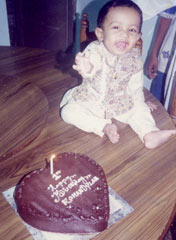 Your
baby's first birthday, he's stepping into toddler hood. This is a good
time to reflect how far your baby has come since her birth.
Your
baby's first birthday, he's stepping into toddler hood. This is a good
time to reflect how far your baby has come since her birth.
By their second birthdays, most of them are losing that 'baby'
look and growing taller instead of rounder. Babies this age are developing a
real personality and will reward you with a delightful sense of humour, smiling
faces, and affectionate hugs. She loves to express affection and delights in
being loved.
Sleeping
Generally between the ages of 1 and 2, a toddler requires about
10 to 13 hours of sleep a day. Two to three hours in day time and 9-10
hours at night. From about one year, your toddler will settle down to sleep
much more happily if the whole process of going to bed follows a routine. Babies
love routine and rituals. Start the routine in the same way every evening, by
giving a bath or if she does not care for it much, give a bed time feeding if
she still has one or lie close to her and pat her rhythmically so as to relax
her. Any time between 7 pm to 9 pm would be suitable. Position your baby's favourite
soft toy next to her while she's sleeping. Just make sure your toddler is getting
enough rest. And remember that every child is different, some need up to two
hours more or less sleep than others.
Feeding
By about 1 to 2 year old, your toddler should be moving towards
eating the same food at mealtimes that the rest of the family are having. Although
she may still be getting half or more of her daily calories from breast milk
or formula, regular table food is helping to balance out her diet. Some toddlers
may show a decreased appetite about now. In the second year of their life, baby's
growth is slowing down and they may add only about 3-4kgs of weight. Teething
also can make your baby lose interest in food. Try to strike the right balance
between letting her eat when she's hungry and letting her pick at her food when
she's not. Don't force food on her, but maintain control over her nutritious
and healthful snacking between meals and breastfeed as often as your child wants
and continue until a baby's second birthday. Although you can now start
to offer foods you've been withholding milk, citrus fruits, egg whites, be on
the lookout for any allergic reactions. Provide fruit or unsweetened yogurt
for dessert at meals. Cheese is excellent too, because it neutralizes the acid
that forms in the mouth and attacks tooth enamel. Take care to avoid foods that
cause choking such as popcorn, hard candies, chunks of carrots, grapes, raisins
and whole nuts. Cut or finely chop such foods, or simply wait until your baby
gets older.
Height and Weight
While developmental growth is going full speed ahead, physical
growth slows down during this year. After her first birthday, your toddler won't
put weight on steadily. He/ she may gain only 3-4kgs this year.
An average 15-month-old girl weighs about 22 pounds (10kgs) and
stands 31 inches tall. Boys tend to be about a pound heavier at 15 months but
about the same height. By age 2, both will stand about 34 inches tall and weigh
about 27 or 28 pounds (12-13 kgs) on an average. Your toddler's head size will
also more or less remain steady. He'll probably add about an inch to his head
circumference, bringing him closer to his adult head size.
Physical Changes of your baby
Movement
Crawls well, stands alone, sits down. Towards the end of this
year, your child may grow confident and skillful enough to go up and down the
stairs alone, by holding onto the railing.
Touching and Holding
Likes to push, pull and dump things. Holds crayons. He may scribble,
but with little control. Turns pages in a book. Feeds self with spoon, waves
bye-bye and claps hands. Rolls a ball. From about 18 months your child will
be able to build a tower of four or even five blocks. Plays alone on floor with
toys. Your baby will be fascinated by pictures long before she can talk, and
will love looking at books.
Talking and Hearing
Says "hi" or "bye" if reminded. Says 8-20 words you can understand.
At about 18 months of age, babies realize that words does have a meaning. When
you ask him, he'll point to objects or pictures and hand them over to you. He
even points out his eyes, hands , nose, mouth etc if you teach him. By the age
of two he may be able to say two words together such as 'me go', 'wha is' and
will know about 200 words in all.
Social Development
Imitates others, especially by coughing, sneezing, or making animal
sounds. At around 18 months of age, he wants to do things by himself and starts
to say no and means it. He may imitate you doing chores. Enjoys an audience
and appreciation. Becomes upset when separated from his loved ones.
| Viewer's Comment |
|
|
| Anjali Swaroop, Delhi 2/5/2016 |
| › |
Thanks far the information very useful |
|
|
|
| Indu Imran Khan, Haryana 28/1/2016 |
| › |
I'll be very thankful for guide us... |
|
|
|
| Arunaramkumar, Bangalore 15/10/2015 |
| › |
It helps me a lot .I don't know what to do but it helps me thanks to webindia123 |
|
|
|
| Shikha Sharma , Delhi 19/8/2015 |
| › |
Thanks.. For info... It's very useful for me. I am also observe the same things in my 13 months son parth. |
|
|
|
| Monika , Gurgaon 8/12/2014 |
| › |
Thanks for the information.....very useful... |
|
|
|
| SONIA SAHA, WEST BENGAL. 5/12/2014 |
| › |
Its true because i observe the same thing in my 19 months daughter.Thanks for the information.Very useful.I really came to know that my child is growing properly.Thanks for all this helpfuL guidelines. |
|
|
|
| sangeetha thiruppathy, Chennai 30/8/2014 |
| › |
Very useful to know things better |
|
|
|
| Leolawrence, Malaysia 18/8/2014 |
|
|
|
| Lucy, Chennai 27/5/2014 |
| › |
Superb......very useful thanks a lot |
|
|
|
| Nandini Anal, Deoghar 5/5/2014 |
| › |
Very nice and also help full. ?.........thanks |
|
|
|
| Sudha , Eluru 29/3/2014 |
| › |
Its true because i observe the same thing in my 18 months daughter |
|
|
|
| Dilip, Surat 24/3/2014 |
| › |
Its very nice tips thanks... |
|
|
|
| Komal Manindersingh, Bhavnagar, Gujrat 11/3/2014 |
| › |
Its really very nice tips. I really came to know that my child is growing properly.Thank you very much. |
|
|
|
| Himanshi dwivedi, Dun 3/2/2014 |
| › |
Thanks for all this useful guidelines |
|
|
|
| Ratheesh Kumar, Calicut, Kerala 31/1/2014 |
| › |
Thanks this useful article and godbless you...but my baby girl says in 9 months.... |
|
|
|
| Gurwinder Singh , Patiala 5/9/2013 |
| › |
Thanks for all this useful guidelines |
|
|
|
| Purabi Jha, Agra 4/9/2013 |
| › |
A lot of thanks for this helpful & useful article. |
|
|
|
| Rajbir, Australia 6/6/2013 |
| › |
Thanks..... My son is 2years old & he is really fussy in eating, & I got lot of tips for his healthy nutrition. your guidelines are really helpful. Thanks lot.. |
|
|
|
| Namita, Ghaziabad, UP 9/4/2013 |
| › |
Thanks .....for help me to be a caring mother by ur tips |
|
|
|
| Hema, Chennai 28/3/2013 |
| › |
My daughter is 12 months old and recently she started avoiding food and started eating very less. This worried me a lot and the above article is helpful to know that 12 to 24 months baby need less nutrition compared to <1 year baby. simple and good article... |
|
|
|
| Meyru, China 9/10/2012 |
| › |
This is nice to know about ur baby, in which age what he will say words and what he need i learnt form ur website. |
|
|
|
| mrs.Jaswinder Lakhan Chaudhary, Nilokheri 22/9/2012 |
| › |
hi,i have a baby boy Tanpreet have 18 months,he is perfect in things as above,very very thanks for the guidelines.
|
|
|
|
| Priya Nandrame, Mauritius 5/8/2012 |
| › |
I have a baby girl call Vygan have 25 months,she's in perfect health as above, Thanks very for the guidelines.
|
|
|
|
| Anjum Ansari, Chhattisgarha 16/7/2012 |
| › |
These guidelines will be helpul in understanding my baby's all round growth. Thank you so much. |
|
|
|
| Radhika, Hyderabad 7/7/2012 |
| › |
Thanks alot for giving such information about chidren. So we can take care of our children in the bestway....
Thank you so much. |
|
|
|
| Rachael Mwenja, Hola 4/7/2012 |
| › |
Thanks alot and keep up the good work of helping parents raise their kids in a good way. |
|
|
|
| Sonali, Nasik 15/6/2012 |
| › |
Very helpful suggestions.....
Thanks |
|
|
|
| Tushar, Nagpur 2/5/2012 |
| › |
Best suggestions for guiding parents... |
|
|
|
|
|
| Jyoti Golchha, Kolkata 6/3/2012 |
|
|
|
Questions of
Questions & Answers |
|
| 1. |
Posted on :
6.7.2015 By : H B Nagle , Nagpur
|
View Answer (0)
|
Post Answer
|
|
| |
My son akshay has been suffering from hydocele for last one year. His one testis is increasing. one more thing is that he is suffering from hemangioma by birth and after two years of his birth hydrocele and tonsils are the new diseases arises |
|
|
|
|
| 2. |
Posted on :
20.5.2014 By : Arav Gagan , Ranchi
|
View Answer (1)
|
Post Answer
|
|
| |
I want to 01 Years old baby Vaccine chart ex. Pneumonia, Hepatitis A, Chicken Pocks, Flu.
1.Pneumonia Patient Baby
2. DOB-02/04/2013 |
|
|
| A1: |
These are the reccommendations for immunization by Indian peadiatric associations
1. Hepatitis A - 1 dose (12 Months) ,
2 Dose (24 Months)
Pnumococcus Vaccination - 1 Dose (1 1/2 Months)
2 Dose (2 1/2 months)
3 Dose - (3 1/2 months)
Chickenpox Vaccination 1 Dose - 15 months
2 Dose - 4- 6 years
Influence Vaccination - Every Year
Check the link for more details
https://www.webindia123.com/health/child/baby/Immunization_Chart.html
Please consult your peadiatrician for further Advise |
| |
Posted By :Admin , Kochi | On 26.5.2014 |
|
|
|
|
| 3. |
Posted on :
27.1.2014 By : Vaishnavi , Chennai
|
View Answer (1)
|
Post Answer
|
|
| |
Hi thanks for the above information and I am having two more question first one is we can use citric acid regularly for new born baby second my son body over heat what I want to do become normal |
|
|
|
|
|
|
| » more... |
Note : All statements given are only for information purpose. We are not responsible or liable for any problems related to the utilization of information on this site. We suggest that you consult a qualified doctor before trying any alternative health care remedies.



