You are in : GARDENING » FLOWERING PLANTS » ORCHIDS » Cattleya Orchid
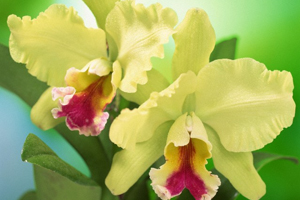
Cattleya Orchid
| Scientific Name : Cattleya hybrid |
| Family : Orchidaceae |
| Colour : Varied |
| Common names : Florist's Orchid |
| |
Cattleyas, the 'Queen of Orchids' belong to a
group which is the most flamboyant and colourful of all orchids. Due to
their relative ease of culture and adaptability, Cattleyas are among the
most popular orchid genus grown. They are a fairly permissive group, cross
with many genera which have similar structures and a range of interesting
and unique characteristics. There are around 48 species and many more
hybrids exist. Named after William Cattleya, they are from the tropical
Americas Laelia's, which can be additionally found in the West Indies and
Mexico.
Cattleyas are epiphytes and have well-developed
water-storage organs (called pseudobulbs) and large, fleshy roots.
Cattleya plants are long-lived perennials and will usually flower
annually. Plants are naturally erect, without need of much staking,
and of a medium olive-green color. The flowers of the Cattleya orchid are some of
the most beautiful exotic fragrance flowers and vary in colours from the
beautiful lavenders to deep reds, whites, yellows and even blues. They
also vary in size, shape and textures. The blooms are often very large,
scented with a sweet perfume and many have very frilly lips and very large
petals.
Cattleyas require medium to bright light. Dark green but limp foliage
indicates too little light. They like a very free draining compost containing at least 50 percent bark. They should be
potted in a porous, free-draining medium. The most commonly used are fir bark, shredded tree-fern fiber, various types of rock, processed coconut fiber
and lately, mixes based on peat moss and perlite. The ideal temperature range of
cattleya group is between 58 and 85° C. Depending upon the temperature,
Cattleyas should be watered about once or twice a week. It should be watered
frequently, during the hotter months of the year. Cattleyas may be allowed to
dry out between waterings. Try to water the plants early in the day, so that the
foliage will be dry by nightfall. They prefer 40-60% relative humidity.
Fertilizer must be provided on a regular basis because most potting media have
little. Well-rooted plants can be given regular feeds of nitrogen-based
fertilizers. Increase feeding during the growing months and reduce
accordingly when growth slows down.
Questions of
Questions & Answers |
|
| 1. |
Posted on :
2.9.2013 By : Shaleen Chikara , Gurgaon, NCR
|
View Answer (0)
|
Post Answer
|
|
| |
I am growing an Orchid in a small pot filled with charcoal (that's how it came). It was flowering when it came, and now I see 3 new shoots emerging from the sides. How should I care for it and how much should I water it? Also, what is a good potting medium?
I am living in Delhi, and currently it is monsoon season, but soon dry winters will set in. |
|
|
|
|
| 2. |
Posted on :
24.1.2011 By : shruthi , bangalore
|
View Answer (2)
|
Post Answer
|
|
| |
few of my phaelanopsis orchids started to loose the topmost leaf(the blooms were present) and eventually all the leaves fell off.The roots are fine,not dry totally but will the plant grow back? what could be the problem and what do i do? |
|
|
| A1: |
As long as the bulbs are still there and not rotten, it will still grow but takes time to wait for new leaves. |
| |
Posted By :grace de la pena , Cagayan de Oro City, Mindanao | On 9.5.2013 |
|
| A2: |
water got into the center of the plant and rotted must water from the bottom and keep tops dry and no it wont grow back |
| |
Posted By :kevin , las vegas | On 22.2.2011 |
|
|
|
|
| 3. |
Posted on :
5.9.2010 By : Maxine , Spring Hill. Fl, Spring Hill. Fl
|
View Answer (1)
|
Post Answer
|
|
| |
I separated my ground orchid, Spathoglottis plicata this spring as it was over crowed and it has not shown any sige of blooming, What so I need to do to encourage blooming? |
|
|
| A1: |
Hi. I had the same problem. However, I solved it with a bi-weekly watering of a small orchid fertilizer (literally 1/8 of a teaspoon). The water itself was taken from my patio pond. I placed the plant in a high humidity area near other plants. Let the plants drain out completely between waterings. The soil mix comprised real, finely chopped coconut bark, crushed egg shells, charcoal, phosphorus, lumus soil - basically nothing compact. Watch out for mealy bugs as they love these plants. |
| |
Posted By :Paulos , Trinidad | On 15.7.2016 |
|
|
|
|
| » more... |