|
|

Friday, April 19, 2024
|
|


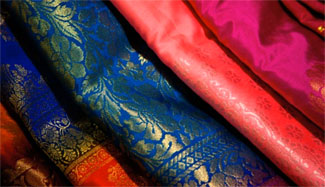 Silk, the queen of textiles dominates the
textile industry with its luster, sensuousness and glamour. The history of silk,
goes back to 4,500 years. India is the second
largest producer of silk, contributing to about 18 per cent of the world production.
Silk, the queen of textiles dominates the
textile industry with its luster, sensuousness and glamour. The history of silk,
goes back to 4,500 years. India is the second
largest producer of silk, contributing to about 18 per cent of the world production.
Today, silk weaving tradition in India revolves around the sari, the ethnic traditional wear that is worn in most parts of the country. The Indians dress themselves in elaborate and colorful silk sarees on festive occasions. The vibrant colours, light weight, resilience and excellent drape etc. have made silk sarees, the irresistible and unavoidable companion ofIndian women. Indian silk is popular all over the world with its variety of designs, weaves and patterns.
Silk, one of the oldest known fibre is a protein fibre, produced
by the silkworm for spinning around its cocoon. Five main variety of silks
are available in India namely Mulberry silk, Tasar silk, Eri silk, Muga silk
and Oak Tasar silk. These are obtained from different species of silkworms which
in turn feed on a number of food plants.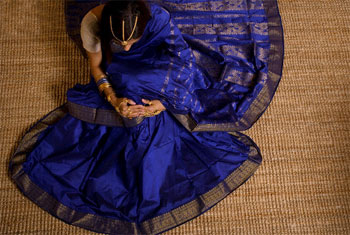
Mulberry silk, known as the commercial silk comes from the silk worm Bombyx mori which feeds on the mulberry plant. In India, the major mulberry silk producing states are Karnataka, Andhra Pradesh, West Bengal, Tamil Nadu and Jammu & Kashmir.
Eri Silk, also known as the Endi or Errandi silk is thick, warm, soft, rare and very long lasting. India is a major producer of Eri Silk. It is grown in Assam and eastern parts of India. It is also found in Bihar, West Bengal and Orissa. Eri silk is produced by Philosamia ricini that feeds mainly on castor leaves.
Muga Silk, the pride of Assam is known for its natural shimmering golden yellow colour. It is obtained from semi-domesticated multivoltine silkworm, Antheraea assamensis. These silkworms feed on the aromatic leaves of Som and Soalu plants. The muga silk, an high value product is used in products like sarees, mekhalas, chaddars etc.
Oak Tasar silk : Less lustrous than mulberry silk, Tassar silk is used mainly for furnishings and interiors. Tasar silk is generated by the silkworm, Antheraea mylitta which mainly thrive on the food plants Asan and Arjun. It is cultivated in the states of Jharkhand, Chattisgarh and Orissa, besides Maharashtra, West Bengal and Andhra Pradesh.
The silk sarees of India are among the living examples of the excellent craftsmanship of the weavers of the country. Their mastery lies in the creation of floral designs, beautiful textures, fine geometry, durability of such work and not the least, the vibrant colours they choose for making sarees. Many states in the country have their own variety of makes in silk as well as weaving centres with their traditional designs, weaving and quality. The silk varieties are renowned by the place where it has been woven.
Banaras is one of the leading silk weaving centres in India. Amru silk, Jamvar, Navarangi, Jamdani etc. are the types of Banaras Saris, in which Amru Silk brocades with a heavy pallu of flowering bushes or the flowering mango pattern are very famous.
Maharashtra is famous for its Paithani Silk saris, generally with gold dots design and Kosa silk of Bhandara district.
Patola silk, known as the pride of Gujarat is noted for their bright colours and geometric designs with folk motifs.
Madhya Pradesh is famous for Chanderi, Maheshwari and Tussar silk saris. Specialty of these saris are the contrasting colours and depiction of animal and human figures on the sarees.
Silk Bomkai Sambalpuri saris from Orissa comes in single and double ikat weaves.
Murshidabad in West Bengal is the home of the famous Baluchari sari in which untwisted silk thread are used for weaving brocades.
In the south, heavy silk saris from Tanjore, Kumbakonam and Kancheepuram in Tamil Nadu are known for their broad decorative borders and contrasting colors. Kancheepuram silks has an enviable position among the best silk sarees in the country for their texture, luster, durability and finish.
Kolegal and Molkalmoru in Karnataka are known for their simple ikat weave with parrot motif on the borders.
A wide range of apparels like dupattas, sarees, salwars, Sherwanis, caps, handkerchiefs, scarves, dhotis, turbans, shawls, ghagras or lehengas, and even quilts, bedcovers, cushions, table-cloths curtains are made of silk. In short, Silk has been mingled with the life and culture of Indians.
CONNECT WITH |
||||||
|
||||||
|
|||||
| ||||||||||
|
|
| Updated on 30/11/2023 |


